VoS NEWS DESK | THE HAGUE | 19 NOVEMBER 2026
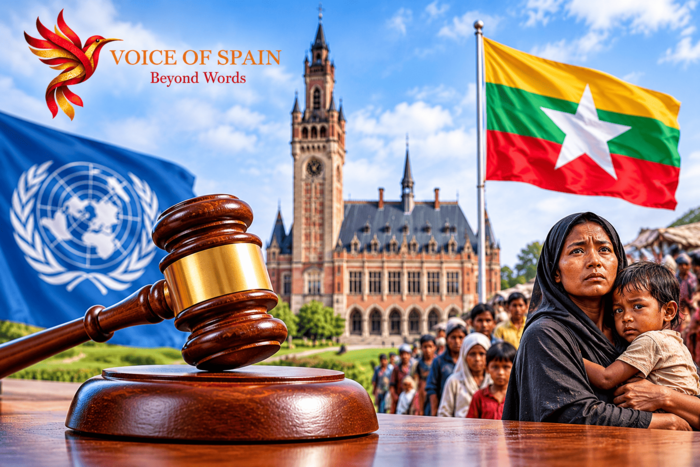
The International Court of Justice (ICJ) is scheduled to deliver a landmark judgment on 19 November 2026 in a case brought by The Gambia against Myanmar over alleged violations of the Genocide Convention involving the Rohingya Muslim population. The proceedings represent a significant moment for international justice, human rights protection and the global effort to establish accountability for alleged mass atrocities.
The case was initiated in November 2019 when The Gambia filed an application accusing Myanmar of violating its obligations under the 1948 Genocide Convention. The legal action concerns the treatment of the Rohingya community, particularly the military operations launched in Myanmar's Rakhine State in 2017. Those operations forced hundreds of thousands of Rohingya to flee across the border into Bangladesh, creating one of the region's most serious refugee crises.
According to international investigations and human rights organisations, the military campaign involved allegations of mass killings, sexual violence, destruction of homes and widespread displacement. Myanmar has rejected accusations of genocide and has previously defended its military operations as security measures against armed groups.
The ICJ held public hearings on the merits of the case in January 2026, allowing both parties to present their legal arguments and supporting evidence. Several other countries also intervened in the proceedings, demonstrating the wider international interest in interpreting and enforcing the Genocide Convention.
The judgment is particularly important because the International Court of Justice is the United Nations' principal judicial organ responsible for resolving legal disputes between states. Its decisions are legally binding on the parties involved, although the court does not possess its own enforcement mechanism.
The potential implications extend beyond Myanmar. A detailed interpretation of the Genocide Convention could influence future international proceedings involving allegations of mass atrocities, state responsibility and the protection of vulnerable populations.
For Rohingya refugees living in Bangladesh and other countries, the proceedings carry considerable significance. Many continue to face difficult living conditions, restricted opportunities and uncertainty about their future. Questions surrounding citizenship, safe repatriation and protection from persecution remain unresolved.
The international community will closely monitor the court's decision as it could establish an important legal precedent for addressing allegations of genocide and strengthening international accountability.
VoS STRATEGIC INSIGHT
The Myanmar case represents a major test of the international legal system's ability to hold states accountable for alleged violations of fundamental human rights. Beyond its immediate consequences for the Rohingya population, the judgment could shape future interpretations of international law and reinforce the importance of the Genocide Convention. However, legal recognition alone cannot resolve displacement or guarantee justice on the ground. Meaningful progress will also require international cooperation, humanitarian protection and effective implementation of the court's decisions.