VoS NEWS DESK | WASHINGTON | 19 NOVEMBER 2026
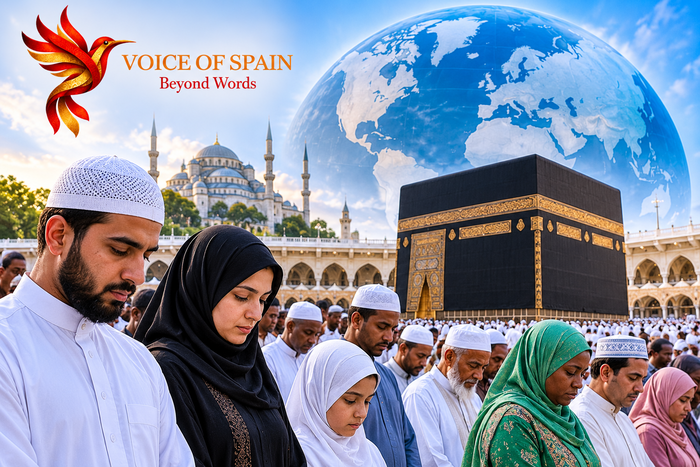
New demographic projections published by the Pew Research Center suggest that Muslims could become the world's largest religious group by 2035, surpassing Christians in total population for the first time in modern global demographic projections. The findings highlight significant changes in population growth, age distribution and fertility patterns across different regions of the world.
According to the research released on 18 November 2026, Christianity and Islam are both expected to experience population growth over the coming decades. However, the Muslim population is projected to increase at a faster rate, potentially changing the long-established demographic position of the world's two largest religious communities.
The projections indicate that in 2020, the global Muslim population stood at approximately 2.02 billion, compared with around 2.27 billion Christians. Researchers estimate that by 2035, the number of Muslims could reach approximately 2.57 billion, compared with 2.52 billion Christians.
One of the major factors behind the projected shift is the difference in fertility rates between the two populations. The research identifies a higher average fertility rate among Muslims as an important contributor to their faster demographic expansion. Differences in age structures also influence long-term population patterns, as younger populations generally have greater potential for future natural growth.
The report also highlights the importance of regional demographic developments. Sub-Saharan Africa is expected to experience particularly significant changes, with both Muslim and Christian communities projected to expand. The region's growing population is likely to play an increasingly important role in determining the global distribution of religious communities.
The findings do not suggest that Christianity is declining in absolute population numbers. Instead, researchers expect both major religious groups to grow, although their relative proportions are projected to change over time.
The broader study examines seven religious categories, including Christians, Muslims, Hindus, Buddhists, Jews, followers of other religions and people who do not identify with any religion. It analyses demographic trends between 2020 and 2070, taking into account fertility, age distribution, mortality, migration and religious switching.
The projections also indicate that the geographic distribution of religious communities could change considerably. By 2070, the Democratic Republic of the Congo is projected to surpass the United States as the country with the largest Christian population. Meanwhile, Pakistan is projected to replace Indonesia as the country with the world's largest Muslim population.
Researchers emphasise that these figures represent projections based on demographic patterns and assumptions rather than guaranteed future outcomes. Changes in fertility, migration, mortality and religious identification could influence the eventual results.
The findings have attracted international attention because they provide a broader understanding of how population dynamics are reshaping societies, communities and cultural landscapes across the world.
VoS STRATEGIC INSIGHT
The projected demographic shift represents an important development in understanding the changing structure of global society. Population growth, particularly among younger communities, is likely to influence future education systems, labour markets, cultural representation and international social dynamics. However, demographic growth should not be confused with political or economic influence. The long-term significance of these projections will depend on how governments and societies respond to changing population structures through education, employment opportunities, social inclusion and sustainable development.