VoS NEWS DESK | MANAMA | 18 November 2026
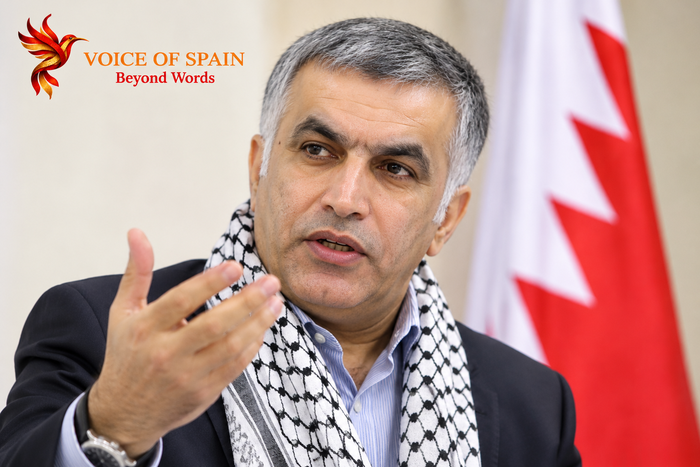
Bahrain's human rights community is mourning the death of prominent democracy activist Nabeel Rajab, who died on Tuesday, 17 November, aged 62. Rajab was one of the country's best-known human rights defenders and spent decades campaigning for political reform, freedom of expression and greater accountability. His death in Türkiye has prompted tributes from international human rights organisations and activists who recognised his contribution to the struggle for democratic freedoms in the Gulf region.
According to the Associated Press, Rajab was found unresponsive at his home in Türkiye on Tuesday morning. His wife and daughter took him to a hospital in Istanbul, where he was pronounced dead. Ebrahim Sharif, an activist and close friend of the family, said relatives believed he may have suffered a heart attack. The exact circumstances surrounding his death were not independently confirmed.
The Bahrain Center for Human Rights, an organisation Rajab previously led as president, confirmed his death and expressed condolences to his family. The Gulf Centre for Human Rights also paid tribute, describing him as one of the region's leading human rights defenders.
Rajab became internationally recognised during Bahrain's 2011 Arab Spring demonstrations, when thousands of people gathered in Manama demanding political reforms, fair representation and constitutional democracy. He emerged as one of the most prominent voices in the movement, documenting events and drawing international attention to allegations of human rights violations during the authorities' response to the protests.
His activism frequently brought him into conflict with Bahrain's authorities. He was repeatedly arrested and prosecuted over his political activities and criticism of government policies. His imprisonment attracted international condemnation from human rights organisations and other campaigners concerned about restrictions on freedom of expression.
One of the most prominent cases against Rajab involved a five-year prison sentence linked to his comments about the Yemen conflict and alleged mistreatment of prisoners. He was transferred to home detention in 2020 while serving that sentence.
Beyond his public campaigning, Rajab played an important role in establishing independent human rights organisations. He helped found the Bahrain Center for Human Rights in 2002 and later contributed to the establishment of the Gulf Centre for Human Rights in 2011. These organisations worked to document alleged abuses, support activists and promote fundamental freedoms across the Middle East.
His work also connected him with international human rights networks, bringing greater attention to political restrictions in Bahrain. Despite repeated arrests and years of imprisonment, he remained a prominent advocate for democratic reform and civil liberties.
Rajab subsequently left Bahrain with his family and continued living in exile in Türkiye. His death has renewed attention on the challenges faced by human rights defenders in the Gulf region and the continuing debate surrounding political freedoms and accountability.
VoS STRATEGIC INSIGHT
The death of Nabeel Rajab marks a significant moment for Bahrain's human rights movement and the wider campaign for political freedoms across the Gulf region. His decades-long activism demonstrated the importance of independent voices in documenting human rights concerns and challenging restrictions on public expression.
His legacy extends beyond the 2011 Arab Spring demonstrations. Through his involvement in human rights organisations and international advocacy networks, he helped bring regional issues to a wider international audience.
For the international community, his passing is a reminder of the challenges faced by individuals who campaign for democratic participation, freedom of expression, political accountability and the protection of fundamental rights.
The future of the movement will depend on the ability of human rights organisations and independent campaigners to continue documenting abuses, supporting vulnerable communities and promoting meaningful reform. Rajab's contribution will remain an important part of Bahrain's modern political and human rights history.