VoS NEWS DESK | KARACHI | 25 NOVEMBER 2026
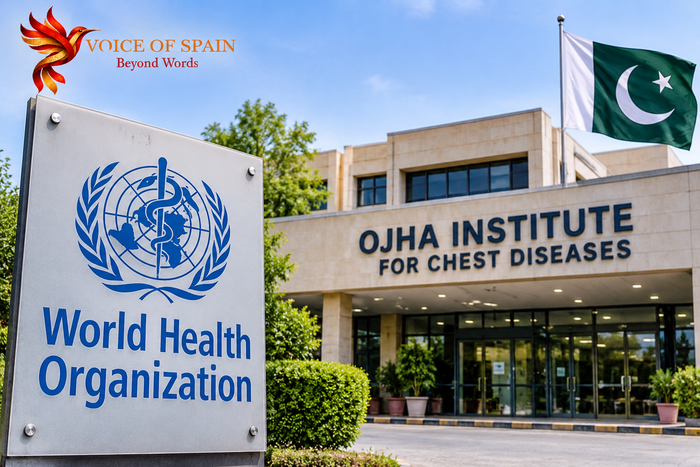
Pakistan's healthcare and medical research sector has achieved an important international milestone after the World Health Organisation (WHO) officially designated the Ojha Institute of Chest Diseases (OICD), operating under Dow University of Health Sciences (DUHS) in Karachi, as a WHO Collaborating Centre for Chest Diseases. The recognition highlights Pakistan's growing contribution to international medical research, particularly in tuberculosis prevention, respiratory healthcare and the development of advanced diagnostic technologies.
Under the new designation, the institute will work within an agreed technical programme with the WHO, focusing primarily on tuberculosis (TB) research and improvements in diagnostic services. A major component of the collaboration will involve exploring the application of artificial intelligence (AI) to strengthen the identification and diagnosis of tuberculosis, potentially supporting more effective healthcare interventions.
The initiative will also include specialised medical training, scientific research and measures to improve healthcare capacity across the region. Through international cooperation, the institute is expected to contribute towards developing improved diagnostic approaches, strengthening professional expertise and supporting evidence-based strategies for managing tuberculosis and other respiratory diseases.
The designation represents an important development for Dow University, which has continued to expand its healthcare, academic and research activities. According to university information, the Ojha Institute has a long institutional history dating back to 1939, when it was established as a sanatorium for patients suffering from tuberculosis. It subsequently became part of Dow University of Health Sciences in 2003.
Over the years, the institute has developed into a specialised healthcare facility serving patients from Sindh and other parts of Pakistan. Its infrastructure includes a 270-bed hospital, affiliated chest clinics, a provincial reference laboratory and a specialised negative-pressure pulmonary tuberculosis intensive care unit. These facilities support the diagnosis, treatment and management of complex respiratory conditions, including drug-resistant tuberculosis.
The institute also provides postgraduate medical education and specialised training programmes in chest diseases. Its academic and clinical activities contribute towards preparing healthcare professionals capable of addressing the growing challenges associated with respiratory illnesses and infectious diseases.
The WHO recognition is expected to create further opportunities for international academic partnerships, collaborative research projects and the exchange of medical expertise. It could also strengthen Pakistan's participation in regional healthcare initiatives by encouraging the adoption of modern diagnostic technologies and improved treatment strategies.
Tuberculosis remains an important public health challenge in many countries, particularly across South Asia, where early diagnosis, accessible treatment and effective disease monitoring are essential. The growing use of artificial intelligence in healthcare research offers additional opportunities to improve diagnostic efficiency and support medical professionals in identifying diseases more effectively.
For Karachi and Pakistan's wider medical community, the designation represents recognition of the institute's established healthcare infrastructure and its potential contribution to international efforts against chest diseases.
VoS STRATEGIC INSIGHT
The WHO designation of Dow University's Ojha Institute represents an important opportunity for Pakistan to strengthen its position in international healthcare research and medical innovation. The integration of artificial intelligence into tuberculosis diagnostics, combined with specialised training and international scientific cooperation, could support improvements in disease detection and treatment capacity. Beyond institutional recognition, the development highlights the importance of investing in research-driven healthcare systems capable of addressing major public health challenges. Sustained collaboration, modern technology and professional training will be essential to translating this international recognition into long-term benefits for patients across Pakistan and the wider region.