
VoS NEWS DESK | KATHMANDU | 24 NOVEMBER 2026
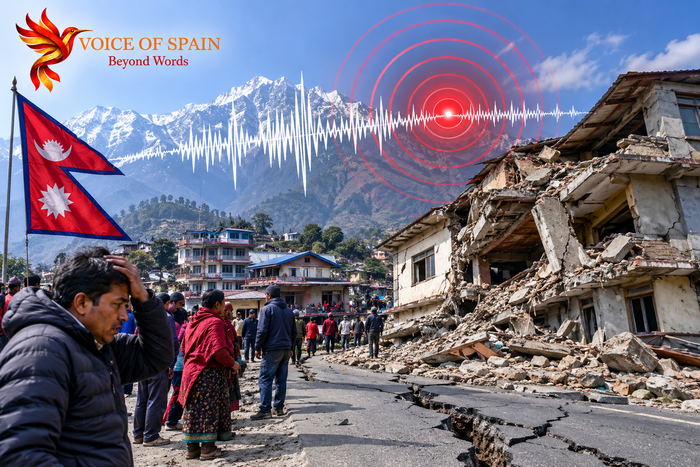
A 5.3-magnitude earthquake struck eastern Nepal on Tuesday morning, triggering tremors across neighbouring regions and drawing attention to seismic activity along the Himalayan belt. The earthquake occurred near the country's eastern region close to the Sikkim border, with reports of shaking emerging from parts of Nepal, India, Bhutan, Bangladesh and China.
According to India's National Centre for Seismology (NCS), the earthquake occurred at approximately 7:02 am Indian Standard Time on 24 November. Its epicentre was recorded at latitude 27.855 degrees north and longitude 87.909 degrees east, at a depth of approximately 20 kilometres beneath the Earth's surface. The location was identified around 61 kilometres north-west of Yuksom in Sikkim, according to the monitoring agency.
The tremors were reported across several areas of eastern Nepal and neighbouring Indian regions. Residents in parts of Sikkim and West Bengal experienced noticeable shaking, while reports also indicated that the earthquake may have been felt in Bhutan, Bangladesh and areas of China. In West Bengal, tremors were reported in Jalpaiguri, prompting concern among residents during the early morning hours.
The earthquake's location near the Himalayan region has attracted particular attention because the area is exposed to significant tectonic activity. The Himalayan mountain range was formed through the continuing interaction of major tectonic plates, making earthquakes an important natural hazard for communities living across Nepal and neighbouring countries.
Despite the widespread reports of tremors, there were no immediate confirmed reports of casualties, injuries or significant property damage following the earthquake. Authorities and monitoring agencies continued to follow developments as further information became available.
The event also highlighted the importance of regional cooperation in earthquake monitoring and disaster preparedness. Since seismic activity does not follow national boundaries, timely communication between monitoring agencies can help neighbouring countries assess potential risks and share information with affected communities.
Residents in earthquake-prone areas are generally advised to follow official safety instructions, remain alert to possible aftershocks and avoid entering buildings that may have sustained structural damage. Emergency preparedness, public awareness and reliable warning information remain essential in reducing the potential impact of future seismic events.
VoS STRATEGIC INSIGHT
The earthquake in eastern Nepal highlights the continuing vulnerability of Himalayan communities to natural disasters. Although no immediate casualties or major damage were reported, the incident demonstrates how seismic activity in one country can affect several neighbouring regions. Strengthening earthquake monitoring systems, improving emergency response coordination and investing in resilient infrastructure will remain essential for protecting communities across South Asia. Regional cooperation and public preparedness can significantly improve the ability of governments to respond effectively when future earthquakes occur.