VoS NEWS DESK | INTERNATIONAL DIPLOMACY | 24 NOVEMBER 2026
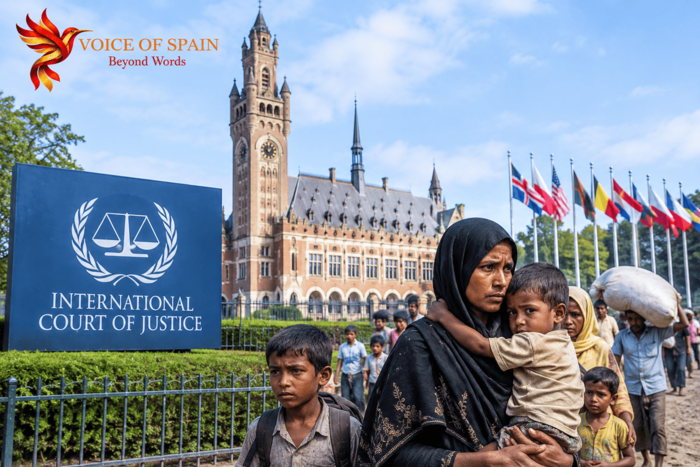
Fourteen countries have acknowledged the International Court of Justice (ICJ) ruling concerning Myanmar's violations of the Genocide Convention against the Rohingya minority, marking a significant development in international efforts to secure accountability for years of violence, persecution and forced displacement. The joint statement, involving the United Kingdom and 13 other nations, has renewed international attention on the situation of Rohingya communities and the legal obligations facing Myanmar.
The statement was issued by the foreign ministers of Australia, Belgium, Canada, Cyprus, Czech Republic, Estonia, Iceland, Latvia, Luxembourg, New Zealand, Portugal, Spain, The Gambia and the United Kingdom. The countries acknowledged the Court's judgment in the case brought by The Gambia against Myanmar under the Convention on the Prevention and Punishment of the Crime of Genocide.
The ministers emphasised that the judgment is binding on Myanmar and called on its authorities to fulfil their obligations under international law. They described the decision as an important step towards accountability and justice for Rohingya victims and survivors, while expressing continued concern over the violence and humanitarian challenges affecting communities in the country.
The United Kingdom has also announced additional measures in response to the situation. London formally recognised the genocide against the Rohingya and introduced sanctions against five senior military figures. These measures include asset freezes and travel bans. The British Government also announced its intention to introduce legislation targeting the export and supply of aviation fuel to Myanmar.
Alongside the sanctions, the UK pledged an additional £5 million in funding to support Rohingya and other vulnerable communities. The assistance is intended to provide essential humanitarian services to approximately 350,000 people in Rakhine State, where needs remain particularly severe.
The developments underline growing international pressure on Myanmar to comply with the ICJ's judgment and address the consequences of the persecution experienced by the Rohingya population. The international community continues to emphasise the importance of protecting survivors, supporting displaced communities and creating conditions for refugees to return voluntarily, safely and with dignity.
VoS STRATEGIC INSIGHT
The joint position of 14 countries represents an important diplomatic signal that international accountability remains central to addressing the Rohingya crisis. Although legal recognition and sanctions do not immediately resolve the humanitarian situation, they can strengthen pressure for compliance with international law. The effectiveness of these measures will ultimately depend on sustained diplomatic engagement, humanitarian assistance and meaningful action to protect the rights of Rohingya communities.