
VoS NEWS DESK | TEHRAN | 15 NOVEMBER 2026
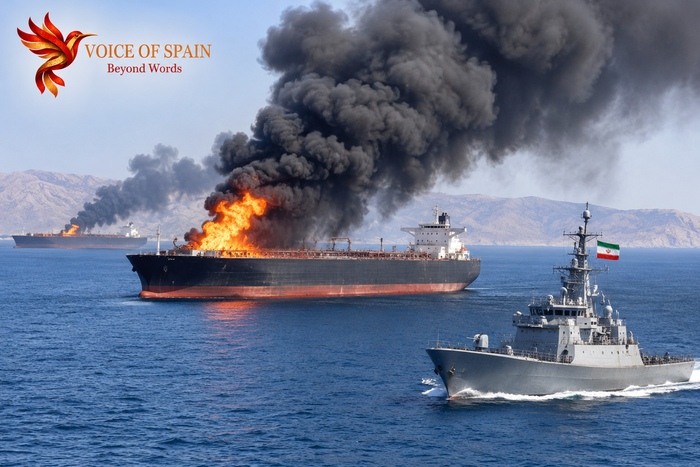
According to statements attributed to Iran's navy and the Islamic Revolutionary Guard Corps, three oil tankers experienced fires after reportedly striking naval mines in separate incidents on Saturday. Iranian authorities said one vessel encountered a mine in the eastern part of the Strait of Hormuz, while two others were reportedly involved in incidents later in the day.
Iranian state media reported that the two tankers involved in the later incidents had allegedly attempted to travel through a restricted maritime route without following the required navigation procedures. The Revolutionary Guard Navy claimed that the vessels struck naval mines, resulting in explosions and fires. However, Reuters reported that it could not independently verify the Iranian authorities' account. The identities and nationalities of the vessels were not immediately disclosed.
The developments have drawn international attention because the Strait of Hormuz is one of the world's most important maritime energy corridors. The narrow waterway connects the Persian Gulf with the Gulf of Oman and the wider Arabian Sea, providing a critical export route for oil and other energy products from major producing countries.
Any prolonged disruption to shipping through the strait could have significant consequences for international energy markets. Oil transportation costs, maritime insurance premiums and delivery schedules could all be affected if shipping companies become increasingly concerned about the safety of commercial vessels operating in the region.
The latest incidents also reflect the continuing confrontation between Iran and the United States over maritime access and regional security. Tehran has imposed restrictions on vessels seeking to pass through the waterway, insisting that ships follow its authorisation procedures. Washington, meanwhile, has maintained pressure on Iranian ports and supported efforts to protect commercial maritime transportation.
International shipping companies are therefore facing an increasingly complicated operating environment. Vessel operators must consider security warnings, navigation restrictions and the potential financial consequences of delays or alternative shipping arrangements.
The reported tanker fires have also renewed questions about the effectiveness of existing maritime security arrangements. Without clear independent confirmation of the circumstances surrounding the incidents, international authorities and shipping operators will need to assess the available information carefully before drawing conclusions about responsibility and the exact causes of the fires.
As the situation develops, governments, energy companies and international maritime organisations will be monitoring further announcements from Tehran and Washington. The safety of commercial shipping through the Strait of Hormuz remains a significant concern for countries dependent on stable international energy supplies.
VoS STRATEGIC INSIGHT
The Strait of Hormuz remains a critical pressure point in international geopolitics because its security directly affects global energy transportation and economic stability. The reported tanker incidents demonstrate how regional military tensions can create uncertainty far beyond the Middle East. Even without a confirmed prolonged disruption, increased security risks could influence oil prices, shipping insurance and international trade. Maintaining safe maritime passage and preventing further escalation will therefore remain essential priorities for regional and international powers throughout 2026.