VoS NEWS DESK | KYIV | 15 NOVEMBER 2026
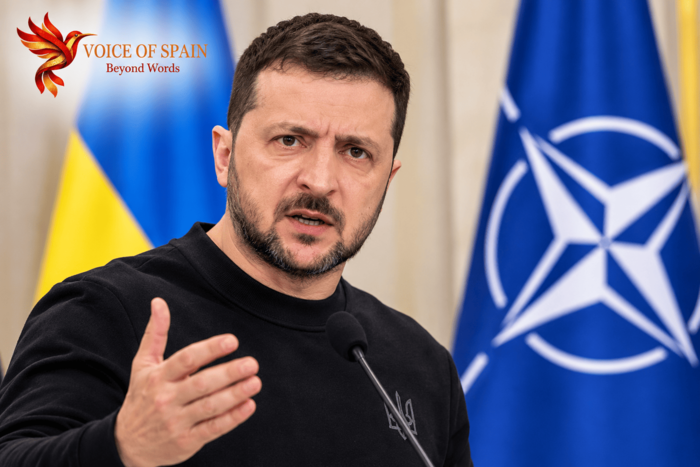
The development emerged following the latest round of US-brokered discussions involving Ukrainian and Russian representatives in Abu Dhabi. Speaking about the negotiations, Zelensky said American officials had asked whether Ukraine would consider withdrawing from Donbas if it received the opportunity to join NATO. According to the Ukrainian president, this was the first time such a connection between territorial concessions and NATO membership had been raised during the discussions.
Zelensky made clear that Ukraine was not prepared to voluntarily surrender its territory. He stressed that the future of the country's borders could not be determined through external pressure or negotiations conducted without considering the interests of Ukrainian citizens. His comments underline Kyiv's continued opposition to any settlement that would require formally giving up land to Russia.
However, the Ukrainian president indicated that a comprehensive international agreement involving credible security guarantees could be presented to the Ukrainian public for consideration. Such an arrangement would need to include strong commitments from NATO and European partners, the preservation of a well-equipped Ukrainian military and substantial financial support for the country's reconstruction.
The discussions also reflect continuing disagreements over the wider European security framework. Russia has repeatedly opposed Ukraine's potential NATO membership, while Kyiv maintains that stronger international security guarantees are essential to preventing another invasion. Zelensky has argued that negotiations should concentrate on ending the current war rather than allowing broader disputes over European security arrangements to delay a settlement.
The Abu Dhabi talks concluded without a major breakthrough, although the Ukrainian president reported progress towards a prisoner exchange involving more than 1,000 people. The negotiations also involved discussions about possible humanitarian arrangements for civilians living in frontline communities.
European governments are increasingly seeking a meaningful role in future diplomatic negotiations. Britain, France, Germany, Italy, Poland and European Union representatives are expected to form part of Europe's wider negotiating presence as discussions continue.
The latest developments demonstrate how difficult it remains to reconcile Ukraine's territorial integrity, Russia's security demands and Western proposals for a long-term peace agreement. Although NATO membership has returned to the centre of diplomatic discussions, major questions surrounding its practical implementation and the future of occupied and contested territories remain unresolved.
VoS STRATEGIC INSIGHT
The possibility of linking NATO membership with territorial concessions highlights the difficult choices facing Ukraine and its international partners. Any peace agreement will need to address more than an immediate end to military hostilities. Long-term security guarantees, territorial sovereignty, military preparedness and economic reconstruction will remain essential elements of a sustainable settlement. For Europe, the outcome could influence the continent's security architecture for generations, making the negotiations one of the most consequential diplomatic challenges of 2026.