VoS NEWS DESK | WASHINGTON | 15 NOVEMBER 2026
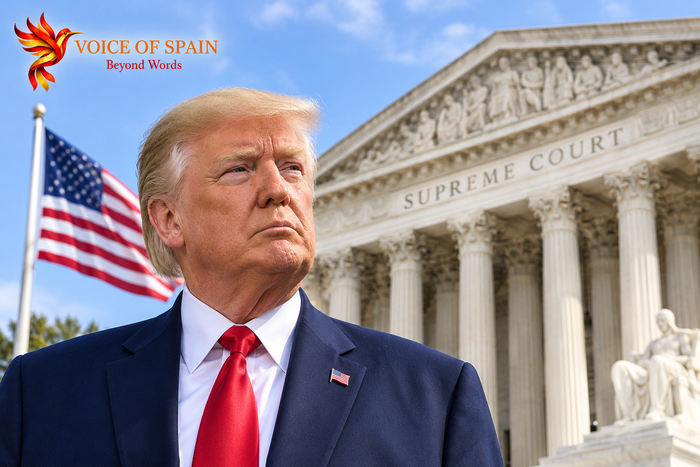
The Supreme Court announced on Friday, 13 November, that it would hear the Trump administration's challenge to lower-court decisions that blocked its restrictions on asylum applications by certain migrants entering the United States through the southern border. The case concerns Presidential Proclamation 10888, issued on 20 January 2025, which declared a national border emergency and suspended access to certain legal protections for migrants crossing between authorised ports of entry.
The administration has defended the proclamation by arguing that the federal government possesses broad authority to control entry into the country and respond to what it describes as an emergency at the US-Mexico border. Officials have also pointed to declining border encounters as evidence supporting the administration's enforcement approach.
However, the policy has faced substantial legal opposition from immigrant-rights organisations and individuals affected by the restrictions. The challengers argue that federal immigration legislation establishes procedures through which people arriving in the United States can request asylum, regardless of their immigration status or the circumstances of their arrival.
The legal challenge was brought by three nonprofit organisations and 13 individual plaintiffs. They include groups working with migrants and asylum seekers who maintain that the presidential proclamation and its implementing guidance unlawfully bypass protections established by Congress.
In earlier proceedings, a federal district court ruled against the administration's approach, finding that the president could not independently replace statutory immigration procedures with alternative removal arrangements that were not authorised by Congress. The administration appealed the decision, but a divided three-judge panel of the US Court of Appeals for the District of Columbia Circuit upheld the central ruling in April 2026.
The Supreme Court has now agreed to consider two principal legal questions: whether the presidential proclamation and its implementing guidance are lawful, and whether federal law restricts lower courts from issuing class-wide relief in cases challenging immigration enforcement policies.
The justices did not agree to consider a separate government challenge concerning the definition of the plaintiff class under constitutional and procedural rules.
The case is particularly significant because it involves the relationship between presidential authority and immigration protections established through federal legislation. At the centre of the dispute is whether the executive branch can suspend access to established asylum procedures through a presidential proclamation during a declared border emergency.
For migrants and asylum seekers, the outcome could have important consequences for access to legal protection when entering the United States. People fleeing persecution, violence or other serious threats may face additional uncertainty while the judicial process continues.
The restrictions remain in effect while the litigation proceeds, following the suspension of the lower-court ruling pending Supreme Court review. The justices are expected to hear arguments during spring 2027, with a decision anticipated by the end of June or early July.
The proceedings form part of a broader series of immigration-related disputes reaching the Supreme Court during its current term, including legal challenges involving deportations to third countries and the detention of immigrants without access to bond hearings.
VoS STRATEGIC INSIGHT
The Supreme Court's decision to review the asylum restrictions places the balance between presidential immigration authority and statutory legal protections at the centre of an important constitutional debate. The outcome could influence how future administrations exercise executive powers during border emergencies and how federal courts review immigration enforcement measures. Beyond its immediate implications for migrants seeking protection, the case may establish an important precedent concerning the relationship between national border security, congressional legislation and access to the American asylum system.