VoS NEWS DESK | PRAIA | 16 November 2026
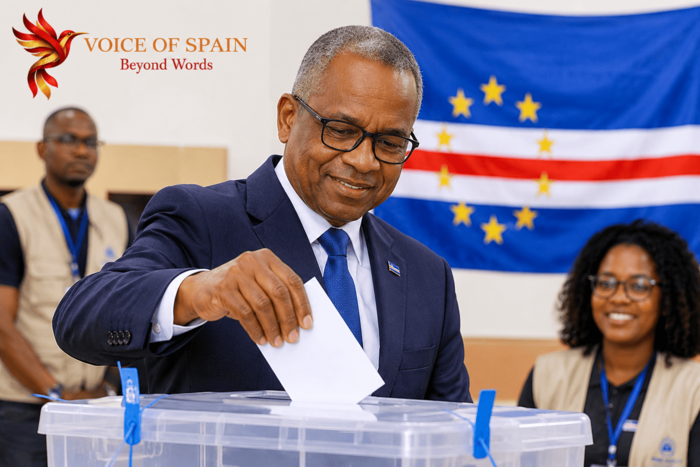
Cape Verde's presidential election has attracted international attention, with incumbent President José Maria Neves securing a commanding lead in provisional results while opposition candidate Joana Rosa makes history as the first woman to contest the country's highest political office since independence.
Voting took place on Sunday, 15 November, with six candidates competing for the presidency of the West African island nation. The election represents an important moment for the country's democratic institutions, particularly regarding women's political participation and the future direction of national leadership.
According to provisional figures published on Monday, Neves received approximately 63.8 per cent of the vote, equivalent to 79,945 ballots. His main challenger, former Justice Minister Joana Rosa, secured approximately 31.6 per cent, with 39,544 votes. These figures were based on results from 1,244 of the country's 1,296 polling tables, representing approximately 96 per cent of the total.
Neves, who became president in 2021, is seeking a second five-year term. He is supported by the African Party for the Independence of Cape Verde (PAICV), which also performed strongly in the parliamentary elections held in May.
Rosa represents the opposition Movement for Democracy (MpD). Her participation is particularly significant because Cape Verde has never previously had a female presidential candidate since gaining independence from Portugal in 1975. Although her campaign has not translated into a leading position in the provisional count, it has brought greater attention to women's representation in national politics.
The election has also taken place amid broader discussions about economic development, unemployment, living costs and opportunities for younger generations. As an island nation with a relatively small domestic market, Cape Verde continues to face challenges involving economic diversification, employment creation and migration.
Under the country's political system, the president serves as head of state, while the prime minister leads the government. Nevertheless, the presidency retains important constitutional responsibilities, including legislative veto powers and a role in resolving political disputes.
A candidate must receive more than half of the valid votes to secure victory in the first round. If no candidate reaches that threshold, the two leading contenders proceed to a second round scheduled for 29 November.
Final confirmation of the result remains dependent on the completion of the official electoral process.
VoS STRATEGIC INSIGHT
Cape Verde's election highlights the relationship between democratic stability, political representation and institutional development. Joana Rosa's historic candidacy represents progress in women's participation in African politics, regardless of the final electoral outcome. Meanwhile, the strong provisional position of José Maria Neves reflects the importance of political continuity and public confidence. The country's future leadership will face continuing challenges involving employment, economic diversification, social development and international partnerships.