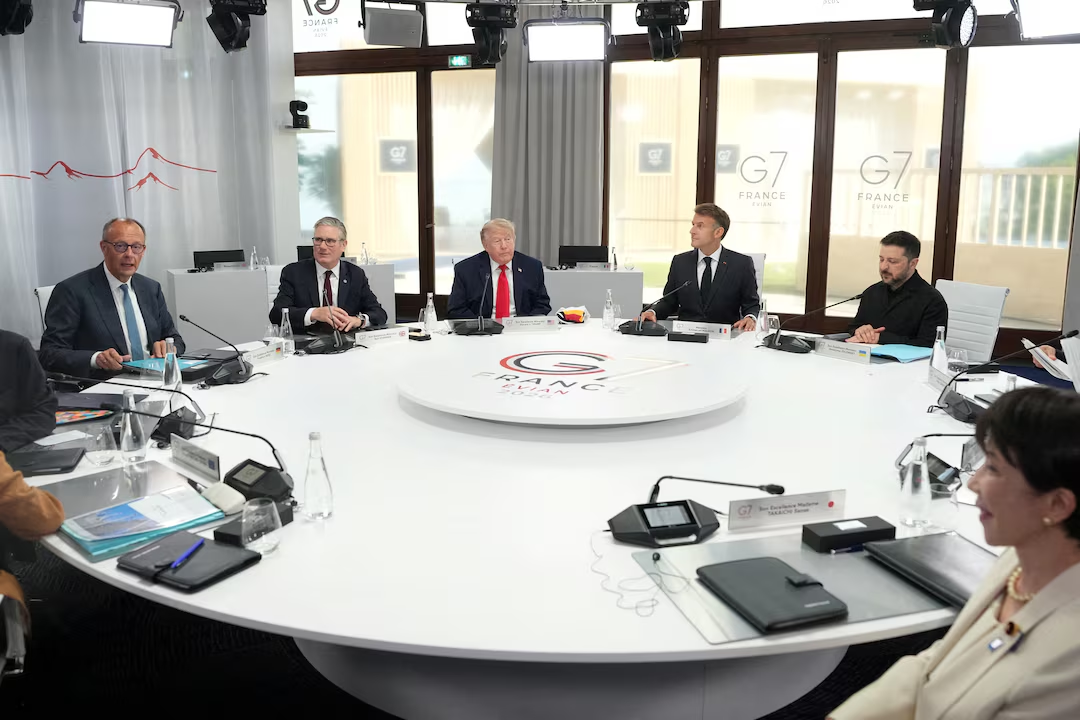
The Group of Seven summit in France has prioritized discussion of Western nations' economic dependency on China, particularly regarding critical minerals essential for renewable energy technology and advanced manufacturing. G7 leaders have acknowledged that China's dominance in rare earth element processing and mineral extraction creates strategic vulnerabilities for Western economies and constrains their ability to pursue independent technology and energy policies. The assembled nations have committed to developing alternative supply chains and diversifying mineral sourcing arrangements to reduce reliance on Chinese suppliers, recognizing that geopolitical competition increasingly centers on control of resources essential for technological advancement. Discussions have focused on establishing coordinated procurement strategies, investing in domestic mineral extraction and processing capabilities, and strengthening relationships with alternative suppliers in Africa, Southeast Asia, and Latin America. The initiative reflects broader Western recognition that economic interdependence with China creates asymmetric vulnerabilities that Beijing can potentially exploit during periods of geopolitical tension. G7 members have also discussed mechanisms for ensuring that mineral extraction and processing operations meet environmental and labor standards, attempting to balance economic security concerns with commitments to sustainable development and human rights.
The mineral dependency discussion represents a significant shift in Western economic strategy, moving away from assumptions that globalized supply chains and economic interdependence would necessarily promote peace and cooperation. G7 leaders have acknowledged that China's strategic use of export controls and supply chain leverage during previous disputes has demonstrated the risks of excessive reliance on any single supplier for critical resources. The summit has produced commitments to increased investment in research and development for alternative materials and technologies that might reduce dependency on critical minerals, as well as agreements to coordinate industrial policy to support domestic production capabilities. International observers have noted that the G7 approach reflects recognition that contemporary geopolitical competition increasingly centers on technological and economic dominance rather than traditional military confrontation. The initiative has implications for developing nations that possess significant mineral reserves, as Western nations seek to establish alternative partnerships and investment relationships. China has responded to the G7 discussions by emphasizing its role as a responsible global supplier and by highlighting Western nations' historical reliance on resource extraction from developing countries. The situation illustrates the complex dynamics of contemporary international relations, where economic interdependence, technological competition, and geopolitical rivalry intersect to shape national strategies and international cooperation frameworks.