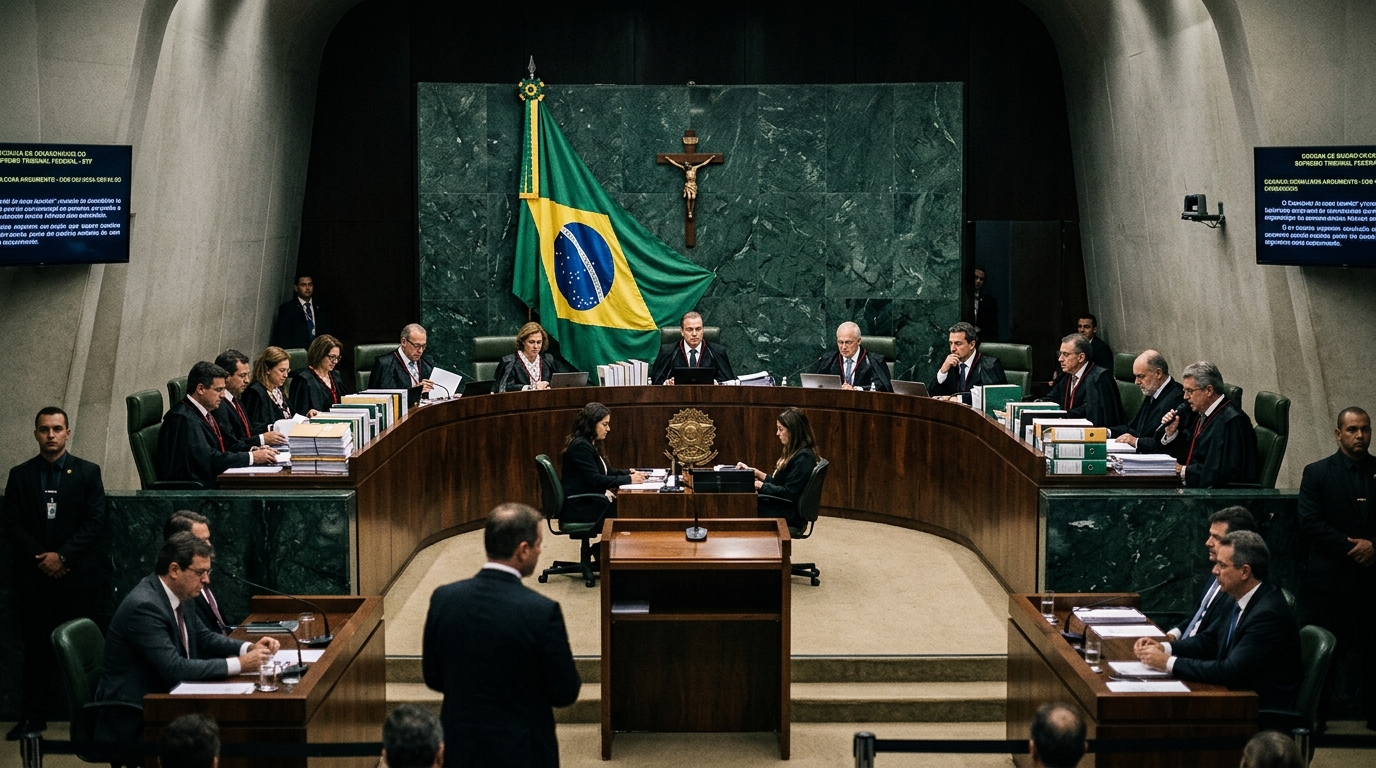
Brazil's Supreme Court has convicted Eduardo Bolsonaro, son of former president Jair Bolsonaro, of attempting to solicit United States government intervention in his father's ongoing legal proceedings related to alleged coup plotting. The conviction represents a significant development in Brazil's judicial reckoning with the previous administration and reflects concerns about foreign interference in domestic legal matters. Eduardo Bolsonaro has denied the charges, characterizing the conviction as politically motivated and baseless, while his legal team has indicated intention to appeal the decision through available judicial channels. The case emerged from investigations into communications between Bolsonaro family representatives and American officials, with prosecutors alleging that Eduardo sought to leverage US political influence to affect the trajectory of his father's trial. The Trump administration has responded to the conviction by imposing tariffs on Brazilian goods and implementing sanctions against Brazilian judicial officials involved in the case, escalating diplomatic tensions between the two nations. The incident highlights the intersection of domestic Brazilian politics with international relations and raises questions about appropriate boundaries for foreign government involvement in another nation's judicial processes.
The conviction carries implications for Brazil's democratic institutions and the independence of its judiciary, with international observers monitoring whether the decision reflects genuine legal findings or political considerations. Former President Bolsonaro faces multiple legal challenges, including accusations of attempting to overturn the 2022 election results and involvement in a conspiracy to maintain power through unconstitutional means. The case against his son underscores the broader political polarization within Brazil, where supporters of the former president view judicial proceedings as persecution while critics argue that accountability for alleged constitutional violations is essential for democratic governance. The Trump administration's retaliatory measures have drawn criticism from international observers who argue that such actions constitute inappropriate interference in Brazilian sovereignty and judicial independence. Brazilian civil society organizations have expressed concern about the politicization of international relations and the potential for great power competition to undermine the rule of law in smaller nations. The situation illustrates the complex dynamics of contemporary international relations, where domestic legal proceedings become entangled with geopolitical competition and where powerful nations may leverage economic and diplomatic tools to influence outcomes in other countries' judicial systems.