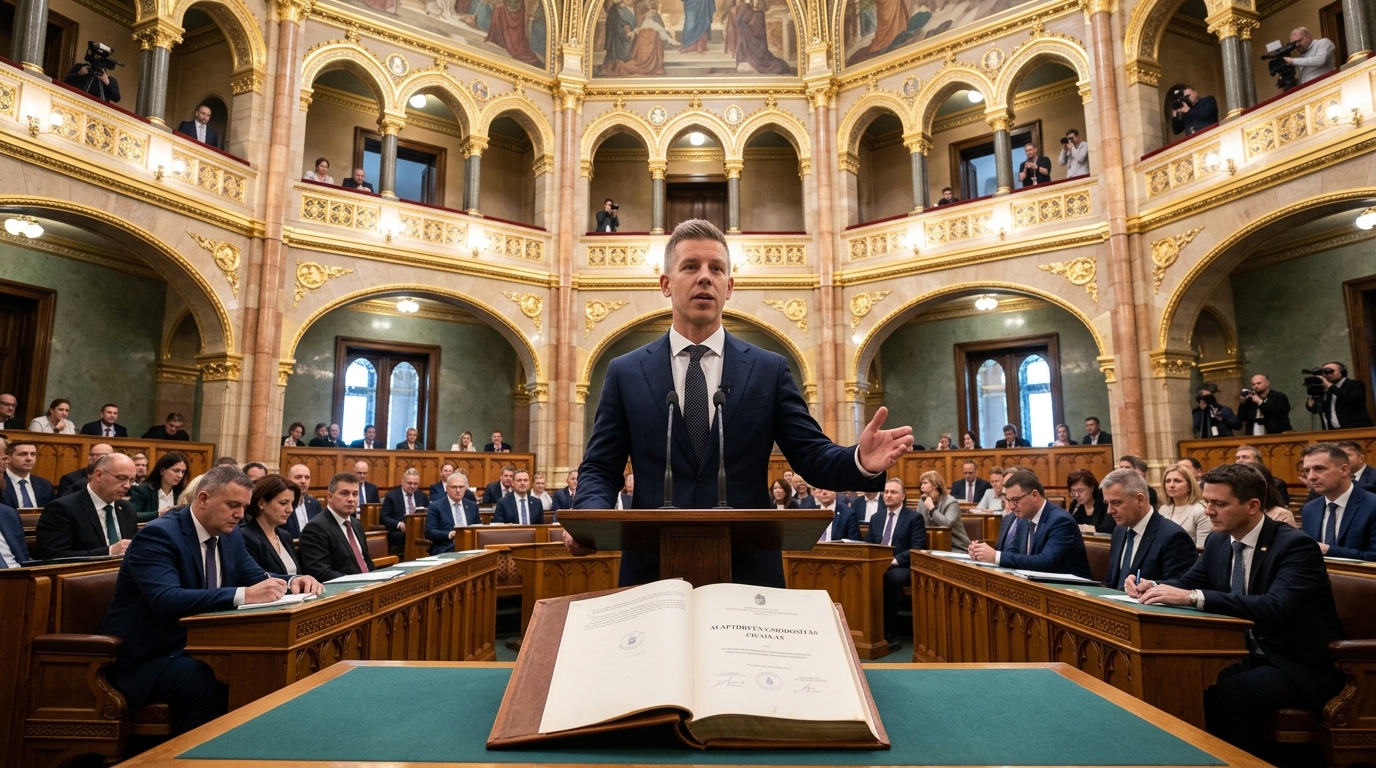
Hungary's parliament has approved a constitutional amendment introducing term limits for prime ministers, restricting any individual to a maximum of eight years in office, in a move widely interpreted as an effort to prevent the potential return of former Prime Minister Viktor Orban to power. The reform represents one of the first major initiatives undertaken by new Prime Minister Peter Magyar, who has pledged to return Hungary to the European mainstream and to address concerns regarding democratic governance and rule of law that have characterized recent Hungarian politics. The term limits amendment reflects Magyar's commitment to institutional reform and to preventing the concentration of executive power that characterized Orban's previous tenure as Prime Minister. The constitutional change requires approval from a supermajority of parliament, which Magyar's coalition has secured, demonstrating broad political support for the reform among Hungarian lawmakers. The term limits amendment is expected to significantly constrain any potential political comeback by Orban and to reshape Hungarian politics by preventing the emergence of dominant political figures who can accumulate excessive executive power.
The Hungarian parliament's approval of term limits for prime ministers represents a significant development in European politics and reflects broader efforts to strengthen democratic institutions and prevent the concentration of executive power. The reform addresses concerns raised by EU institutions and international observers regarding democratic governance in Hungary under Orban's previous leadership, when critics argued that executive power was excessively concentrated and democratic checks and balances were weakened. The term limits amendment is part of a broader reform agenda pursued by the Magyar government to align Hungary more closely with EU standards and to address concerns regarding judicial independence, media freedom, and democratic accountability. The reform also reflects the new government's commitment to improving Hungary's relationship with the EU and to addressing the concerns that led to EU sanctions and restrictions on Hungarian access to EU funds. The successful implementation of the term limits amendment will require sustained political commitment and may face legal challenges from Orban supporters who argue that the reform violates constitutional principles. The outcome of these political and legal battles will significantly influence the trajectory of Hungarian democracy and the country's relationship with the European Union.