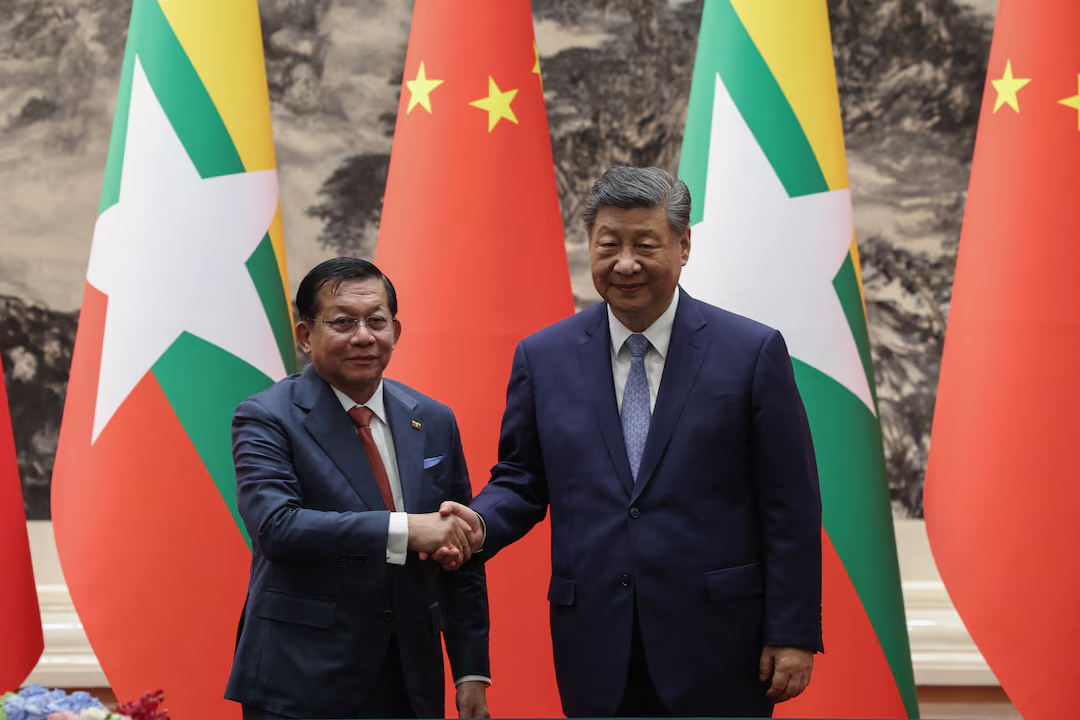
Myanmar's President Min Aung Hlaing has arrived in Beijing for a state visit that underscores the deepening strategic partnership between China and Myanmar's military government, with Chinese President Xi Jinping publicly endorsing the political leadership of the former junta chief. The visit, occurring just days after Min Aung Hlaing's engagement with India, demonstrates Myanmar's careful balancing act between its two major regional powers while tilting decisively toward China's sphere of influence. During bilateral talks, Xi and Min Aung Hlaing are expected to discuss military cooperation, infrastructure development, and China's Belt and Road Initiative projects in Myanmar, which have become central to the country's economic development strategy. The timing of the visit is significant, coming amid Myanmar's internal political consolidation following the 2024 overthrow of Aung San Suu Kyi's democratic government and the subsequent military takeover. China's explicit endorsement of Min Aung Hlaing's political legitimacy carries substantial weight in international forums and signals Beijing's commitment to supporting Myanmar's military regime despite international criticism regarding human rights and democratic governance concerns.
The Myanmar-China relationship has evolved into one of the most strategically important partnerships in Southeast Asia, with profound implications for regional geopolitics and the broader competition between China and India for influence in the Indo-Pacific region. China has invested heavily in Myanmar through infrastructure projects, military assistance, and economic partnerships that have made the country increasingly dependent on Chinese support for its development and security. The military cooperation agreement signed between the two nations in February 2026 further solidified this relationship, providing China with enhanced access to Myanmar's territory and strategic position along critical sea lanes. India views this deepening China-Myanmar partnership with concern, as it reduces New Delhi's influence in a country that shares a long border with India and has historically served as a buffer zone in regional power dynamics. The visit also reflects Myanmar's need for international legitimacy and economic support as it faces internal challenges, including ongoing conflicts with ethnic armed organizations and international pressure regarding governance and human rights issues. As Min Aung Hlaing consolidates military rule in Myanmar, China's backing provides crucial diplomatic cover and economic resources that enable the regime to resist international pressure and pursue its domestic agenda without fear of isolation or sanctions.