
VoS NEWS DESK | LONDON | 12 NOVEMBER 2026
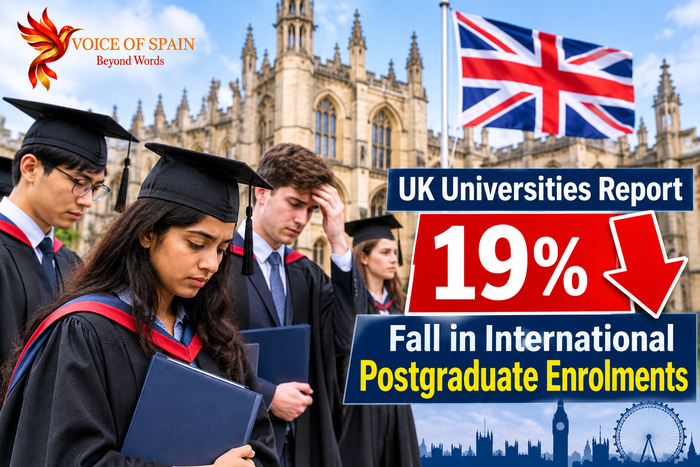
Universities across the United Kingdom are experiencing a significant decline in international postgraduate enrolments, raising concerns about the country's position as one of the world's leading destinations for overseas students. New research indicates that international postgraduate recruitment in the UK has fallen by 19% during the current academic year, as stricter immigration requirements, changing student visa policies and growing competition from alternative education destinations reshape global student mobility.
The findings come from a survey conducted by Studyportals involving 437 universities across 63 countries. The research highlights increasing difficulties for traditional international education destinations, including the United Kingdom, the United States, Canada and Australia. Among the countries surveyed, the UK recorded the sharpest decline in postgraduate recruitment, with 79% of participating British institutions reporting fewer international postgraduate students.
The figures also indicate that the decline is not limited to postgraduate programmes. Around 43% of surveyed UK institutions reported a reduction in international undergraduate enrolments, suggesting that changes in immigration policies and international student preferences are affecting different levels of higher education.
Universities have identified stricter visa requirements and uncertainty surrounding immigration regulations as important factors influencing recruitment. Restrictions introduced in recent years, including limitations on international students bringing family members to Britain, have changed the country's appeal for some prospective applicants. Changes affecting post-study employment opportunities and additional compliance requirements have also contributed to concerns among universities and international education representatives.
The decline is particularly significant because international students represent an important source of revenue for British higher education institutions. Overseas tuition fees help universities finance academic programmes, research activities, infrastructure and institutional operations. A sustained reduction in international enrolments could therefore increase financial pressure on institutions already dealing with rising operational costs and funding challenges.
The survey also points towards a wider shift in global education preferences. Universities in continental Europe and Asia are reporting comparatively stronger international recruitment trends, with institutions in these regions benefiting from growing student interest. According to the research, postgraduate enrolments in Asia increased by an average of 7%, while continental European and Asian destinations are attracting students seeking alternative study opportunities.
The situation presents a challenge for the UK government as it attempts to balance immigration management with the economic and academic contribution of international education. British universities continue to compete globally for talented students, researchers and future professionals, making international recruitment an important part of the country's higher education strategy.
Education institutions are increasingly calling for greater clarity and consistency in immigration policies to help prospective students make informed decisions. The coming academic cycles will be important in determining whether the UK can restore international recruitment levels and maintain its competitiveness against emerging education destinations.
VoS STRATEGIC INSIGHT
The decline in international postgraduate enrolments highlights the close relationship between immigration policy and higher education competitiveness. While governments have legitimate reasons to regulate student migration, restrictive or uncertain policies can influence the decisions of students considering international study destinations. For the United Kingdom, maintaining a balance between immigration controls and educational openness will remain essential. Universities depend on international students not only for tuition revenue but also for research collaboration, academic diversity and global institutional partnerships. The continued growth of European and Asian education destinations could further reshape international student mobility throughout 2027.