VoS NEWS DESK | WASHINGTON | 11 November 2026
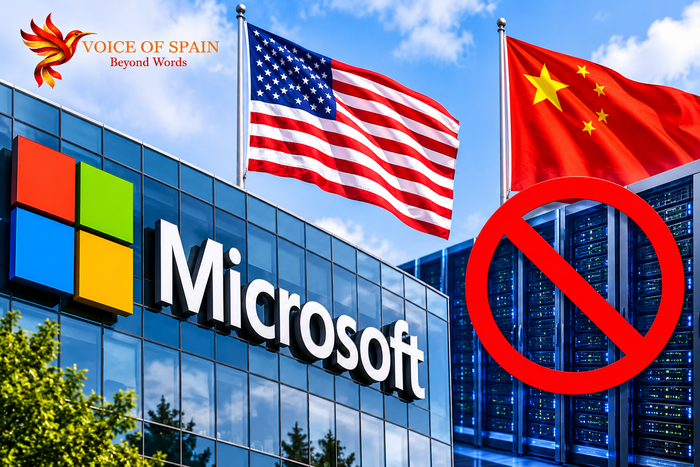
Microsoft and several technology industry representatives are pressing the Trump administration to reconsider plans to restrict imports of new Chinese optical transceivers, essential components used in artificial intelligence data centres.
According to people familiar with the discussions, the company believes that introducing the proposed restrictions could create significant supply chain challenges for American technology companies. The components enable high-speed data transmission through fibre-optic cables, connecting servers, routers and switches within large data centre facilities.
The proposed restrictions are being considered by the Federal Communications Commission (FCC), which oversees the telecommunications sector in the United States. Officials have raised national security concerns, suggesting that Chinese-made equipment could potentially be exploited for data theft, malware installation or disruption of critical digital infrastructure.
However, Microsoft and other industry participants argue that removing Chinese suppliers from the American market without sufficient alternative production capacity could create serious difficulties for the technology sector.
The scale of Microsoft's infrastructure expansion illustrates the importance of maintaining reliable access to essential components. According to Cleanview, a market intelligence company tracking data centre development, Microsoft has 35 data centres under construction across the United States, with another 134 planned.
Technology companies are concerned that restrictions could delay these projects and leave expensive artificial intelligence hardware underutilised. Industry representatives have warned that companies may already have purchased advanced AI chips, but without the optical equipment required to connect their systems, those investments could remain unused.
China currently accounts for approximately two-thirds of the global optical transceiver market, according to Counterpoint Research. This substantial market position makes alternative sourcing particularly challenging for American companies seeking to expand their computing infrastructure rapidly.
Microsoft was among the companies that raised concerns during discussions with officials from the White House Office of Science and Technology Policy and the National Security Council in September.
The debate reflects a broader challenge facing Washington as it attempts to reduce strategic dependence on Chinese technology while maintaining its competitive position in artificial intelligence.
The FCC's proposed restrictions remain under consideration, and the final scope and timing of any potential measure have not been confirmed.
VoS STRATEGIC INSIGHT
The dispute demonstrates how global technology competition increasingly depends on supply chains extending beyond semiconductors and advanced computing systems. Optical transceivers may appear to be relatively specialised components, but they are essential to the operation of modern AI infrastructure.
For the United States, balancing national security with industrial competitiveness will require careful consideration of alternative suppliers, domestic manufacturing capacity and the economic consequences of trade restrictions.
Microsoft's position highlights the complexity of reducing dependence on Chinese technology without creating obstacles for domestic innovation. The outcome could influence future investment decisions, international technology partnerships and the development of AI infrastructure worldwide.