VoS NEWS DESK | THE HAGUE | 22 NOVEMBER 2026
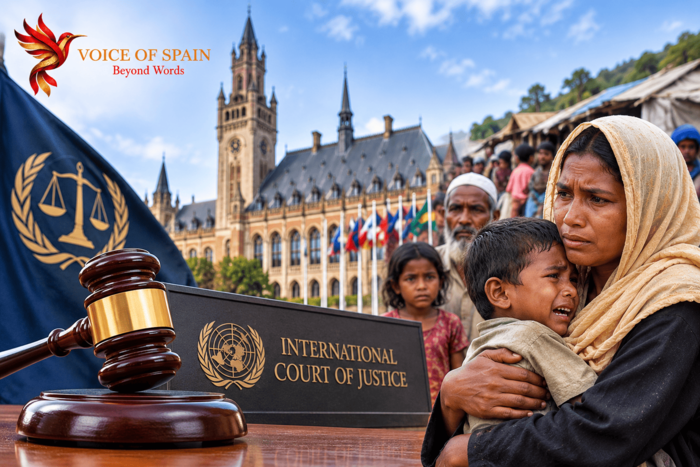
The International Court of Justice (ICJ) has delivered a landmark judgment finding Myanmar responsible for committing genocide against the Rohingya population during the military clearance operations in northern Rakhine State in 2017. The decision represents a historic development in international justice and marks a significant moment in the long-standing efforts to secure accountability for atrocities committed against the Rohingya community.
The judgment was delivered on 19 November 2026 in the case brought by The Gambia against Myanmar under the Convention on the Prevention and Punishment of the Crime of Genocide. By a majority of nine votes to six, the Court found that Myanmar had violated its international obligations by committing genocide against the Rohingya population. It also determined that the country had failed to fulfil its responsibilities to prevent and punish genocidal acts committed alongside its security forces.
The Court's findings address the severe violence experienced by the Rohingya during the 2017 military operations, which involved widespread killings, sexual violence, destruction of villages and the forced displacement of hundreds of thousands of people. Evidence presented during the proceedings highlighted the devastating impact of these operations on the community, with more than 10,000 people reported killed in the atrocities examined by the Court.
The ICJ has directed Myanmar to take several measures to comply with its obligations under international law. These include investigating individuals reasonably suspected of committing acts of genocide, prosecuting and punishing those responsible where appropriate, introducing the necessary national legislation and providing guarantees that similar violations will not occur again.
The judgment also addresses the future of displaced Rohingya communities. Myanmar is required to adopt restitution measures that support the safe, voluntary and dignified return of displaced Rohingya people, alongside family reunification. The Court further determined that Myanmar must compensate the Rohingya community and its members for the damage caused by violations of the Genocide Convention.
However, the ruling has already generated a strong response from Myanmar's authorities. On 20 November, the country's Foreign Ministry criticised the judgment, describing the outcome as disappointing and questioning the Court's assessment of the evidence. The government highlighted the six dissenting votes and indicated that it would consider the implications of the decision.
International reactions have continued to emerge, with human rights organisations and United Nations representatives describing the ruling as an important step towards justice. Attention is now shifting towards implementation, particularly whether Myanmar will fulfil the Court's requirements and whether international pressure will produce meaningful improvements for the Rohingya population.
Around 1.2 million Rohingya refugees remain in difficult conditions in Bangladesh, making questions of safe return, protection and humanitarian assistance central to the international response.
VoS STRATEGIC INSIGHT
The ICJ judgment represents a significant development in the international legal response to genocide and mass atrocities. However, a legal finding alone cannot guarantee justice without effective implementation. The real test will be whether Myanmar complies with the Court's orders, whether victims receive meaningful compensation and whether displaced Rohingya families can eventually return home safely and voluntarily. The decision also reinforces the importance of international cooperation in protecting vulnerable communities and holding states accountable under international law.