VoS NEWS DESK | PARIS | 20 NOV 2026
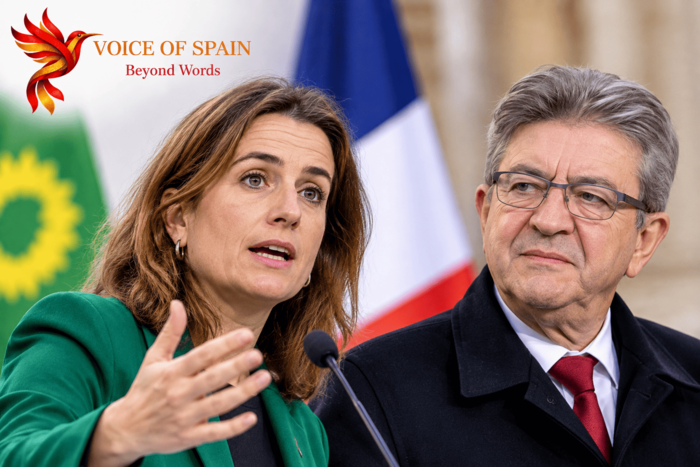
Marine Tondelier, leader of France's Green political movement, has indicated that she is prepared to work towards a broader electoral coalition centred on Jean-Luc Mélenchon's presidential ambitions. Her position represents a potentially important development as political parties begin preparing their strategies for the 2027 presidential contest.
Tondelier has proposed a period of discussions with Mélenchon's La France Insoumise (LFI) movement to examine the possibility of establishing a common political programme. The proposed discussions would cover government priorities, cooperation during legislative elections and the organisation of a joint electoral campaign.
The initiative has received a positive response from representatives of La France Insoumise, although formal negotiations have not yet produced a final agreement. The Green leader has also indicated that discussions with other political figures, including centre-left politician Raphaël Glucksmann, remain relevant to the wider question of cooperation among progressive parties.
The proposal comes at a time when France's left-wing political groups are attempting to strengthen their position ahead of the next presidential election. A coordinated campaign could potentially bring together voters who are divided between environmental policies, economic reforms and different approaches to European affairs.
However, the proposed rapprochement has generated considerable disagreement within the Green movement. Some party members believe cooperation with Mélenchon could improve the electoral prospects of the wider left and prevent progressive votes from being divided between competing candidates.
Others remain concerned about his political positions, particularly regarding the European Union and the war in Ukraine. Critics argue that an alliance could undermine the Greens' established political identity and its commitment to European cooperation.
Glucksmann has also criticised the proposed direction, raising concerns about the potential consequences for the pro-European character of the French left. These disagreements demonstrate that building a unified political front will require negotiations over more than electoral calculations.
Tondelier's proposal is therefore an important political development, but it does not mean that the Greens have formally endorsed Mélenchon's candidacy. The party is expected to consider its electoral strategy through its internal decision-making process in December, which could determine whether it pursues an independent presidential campaign or supports a broader alliance.
With the 2027 presidential election approaching, the coming weeks could prove important for France's political opposition. The outcome of these discussions may influence candidate selection, parliamentary cooperation and the ability of left-wing parties to present a common alternative to their political opponents.
VoS STRATEGIC INSIGHT
France's potential left-wing alliance reflects a wider challenge facing European progressive movements: balancing political unity with ideological differences. While electoral cooperation can strengthen a party's chances of competing nationally, disagreements over foreign policy, European integration and economic priorities can make long-term partnerships difficult. The Green Party's December decision could become an important indicator of whether France's left can establish a unified political strategy ahead of the 2027 presidential election.