VoS NEWS DESK | INTERNATIONAL EDUCATION & UNIVERSITIES | 4 NOVEMBER 2026
The latest QS Asia rankings were released in November 2026 by Quacquarelli Symonds (QS), an international organisation recognised for evaluating universities through academic, research and institutional performance indicators. The 2027 edition covers more than 1,700 universities across Asia, providing an overview of the region's rapidly developing higher education sector.
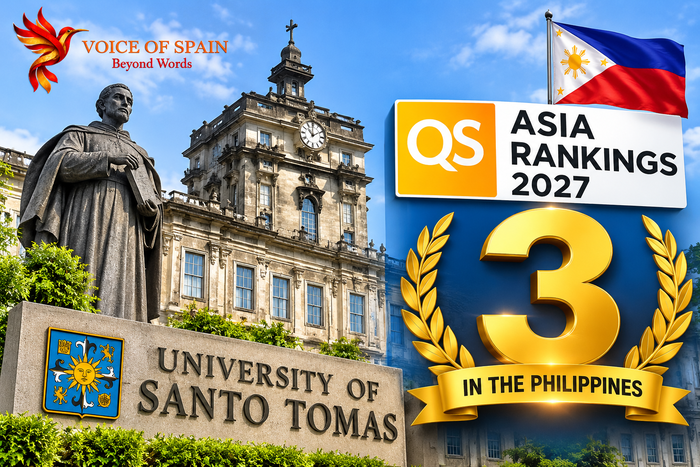
According to the published results, the University of Santo Tomas secured 202nd position in Asia, compared with 184th in the previous edition. Despite dropping 18 places regionally, the institution improved its overall score from 53.5 to 54.1. This performance enabled UST to move ahead of De La Salle University in the Philippine national standings and secure the country's third position.
The University of the Philippines remained the highest-ranked Philippine institution, securing 123rd place in Asia, followed by Ateneo de Manila University at 151st. UST occupied third position nationally, while De La Salle University followed at 204th. The results mean that only two Philippine universities remained within the top 200 institutions in Asia for the 2027 edition.
The ranking represents an important achievement for UST, which has a long history of academic development and higher education in the Philippines. Founded in 1611, the university is widely recognised as one of Asia's oldest existing universities and has developed a broad academic environment covering medicine, engineering, architecture, business, education, science and other professional disciplines.
The QS assessment evaluates participating universities across several major areas, including research and discovery, learning experience, global engagement and employability. These indicators examine different aspects of university performance, such as academic reputation, research impact, international research networks, faculty qualifications, student exchange opportunities and employer reputation.
UST demonstrated particularly strong performance in international engagement. The university received a perfect score of 100 for outbound student exchange and 99.4 for inbound student exchange. These results reflect its participation in international academic mobility programmes and its ability to provide students with opportunities to engage with educational institutions beyond the Philippines.
The university also recorded an international faculty score of 87.5 and an employer reputation score of 86.7. These indicators demonstrate the importance of international academic participation and relationships between universities and professional employers in assessing institutional performance.
However, the rankings also identified areas where further improvement is necessary. UST recorded comparatively lower scores in certain research and academic indicators, including papers per faculty, citations per paper and the proportion of academic staff holding doctoral qualifications. Its faculty-to-student ratio also indicated opportunities for further strengthening the learning environment.
The latest results are part of a wider development in Philippine higher education. A total of 45 universities from the Philippines were included in the QS Asia Rankings 2027, compared with 35 institutions in the previous edition. This represents increased national participation in the regional rankings, although the number of Philippine universities among Asia's top 200 declined.
The University of Hong Kong retained first position in the regional rankings, followed by Peking University in second place. Tsinghua University moved up six positions to secure third place, reflecting the continued strength of major Asian academic and research institutions.
For Philippine universities, the latest results highlight the need to strengthen research funding, international collaboration, academic qualifications and graduate employability. Institutions are increasingly competing not only within their own countries but also with universities across China, Hong Kong, Singapore, Japan and other major education destinations.
VoS STRATEGIC INSIGHT
The University of Santo Tomas securing third place among Philippine universities in the QS Asia Rankings 2027 represents an important development for the country's higher education sector. Its performance demonstrates that established institutions continue to play a significant role in maintaining the Philippines' academic presence across Asia. However, its decline from 184th to 202nd position also highlights the increasing competition faced by Philippine universities at the regional level.
One of the most encouraging aspects of UST's performance is its strong international engagement. Its results in inbound and outbound student exchanges demonstrate the value of international academic partnerships and opportunities for students to gain educational experience beyond national borders. Such programmes can improve academic exposure, cultural understanding and professional development.
At the same time, the university's comparatively lower research indicators underline the importance of investing in academic research, scientific publications and postgraduate qualifications. Strong universities require more than historical reputation and established teaching programmes; they also need consistent research output, modern facilities and qualified academic staff capable of contributing to international knowledge development.
The wider Philippine education system also faces an important challenge. Although 45 institutions have secured places in the latest QS Asia rankings, only two have remained within the regional top 200. This suggests that greater participation in international rankings must be accompanied by improvements in institutional quality, research capacity and graduate outcomes.
For students considering higher education in the Philippines, the rankings provide an additional reference when comparing universities and evaluating international academic opportunities. Nevertheless, prospective students should also consider programme accreditation, teaching quality, tuition costs, campus facilities and employment prospects before selecting an institution.
Overall, UST's third-place national standing is a positive achievement, but its regional ranking demonstrates that further progress will depend on sustained investment in research, international cooperation and academic development. The results also offer an opportunity for Philippine universities to strengthen their position within Asia's increasingly competitive higher education landscape.