VoS NEWS DESK | GLOBAL EDUCATION & SCIENTIFIC RESEARCH
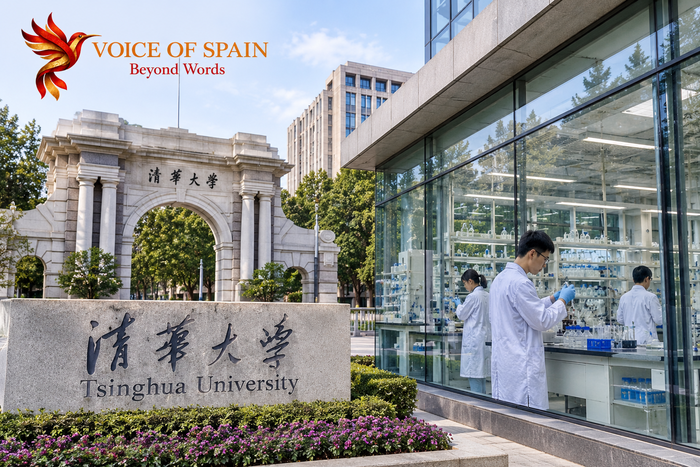
Chinese universities have achieved a significant milestone in international scientific research, with Tsinghua University securing the world's top position in the 2026 ShanghaiRanking Global Ranking of Academic Subjects for Chemistry. The latest results highlight China's growing influence in scientific research, academic innovation and international collaboration, with six Chinese institutions featuring among the world's ten highest-ranked universities in the subject.
According to the 2026 rankings, Tsinghua University secured first place with an overall score of 384.9 points. Stanford University in the United States followed in second place with 370.2 points, while the University of California, Berkeley, ranked third with 353.6 points. The Massachusetts Institute of Technology (MIT) secured fourth position, followed by China's University of Science and Technology of China in fifth place.
Zhejiang University ranked sixth, while the California Institute of Technology (Caltech) secured seventh position. China's Nankai University and Peking University shared eighth place, with Shanghai Jiao Tong University completing the top ten in tenth position.
The results demonstrate the strong representation of Chinese institutions in advanced chemistry research, particularly in scientific publications, research quality and the development of internationally recognised academic expertise.
The ShanghaiRanking assessment evaluates universities through several research-related indicators. These include internationally recognised academic awards, highly cited researchers, publications in leading scientific journals, research impact and international research partnerships.
Tsinghua University's first-place position reflects its performance across these indicators. Its research activities cover several areas of chemistry, including advanced materials, chemical synthesis, energy-related research and emerging scientific technologies.
The ranking also highlights the broader performance of China's higher education sector. Universities such as Zhejiang University, Peking University, Nankai University and the University of Science and Technology of China have established substantial research programmes and international academic networks.
To qualify for the 2026 chemistry ranking, institutions were required to have published at least 300 research papers in the discipline between 2021 and 2025. Publication and bibliometric information was drawn from Web of Science and InCites.
However, subject rankings should be distinguished from overall university rankings. The ShanghaiRanking assessment specifically measures research performance in individual academic disciplines rather than providing a complete assessment of undergraduate teaching, student experience or every aspect of institutional quality.
It is also important to note that different ranking organisations use different methodologies. For example, the 2026 QS World University Rankings by Subject placed MIT first in chemistry, while Tsinghua University was ranked thirteenth. The ShanghaiRanking result therefore represents a specific research-based assessment rather than a universal ranking shared by all organisations.
VoS STRATEGIC INSIGHT
Tsinghua University's achievement reflects the growing importance of Chinese universities in the international scientific research landscape. China's strong representation in the 2026 chemistry rankings demonstrates the scale of its investment in research infrastructure, scientific talent and academic development.
Chemistry plays an essential role in addressing some of the world's most significant technological and environmental challenges. Developments in advanced materials, battery technology, pharmaceutical research, clean energy and industrial chemistry depend heavily on continued scientific innovation.
The growing presence of Chinese institutions in the rankings could also influence international research partnerships. Universities with strong scientific capabilities are increasingly important partners for multinational research projects, industrial development and technological cooperation.
However, international academic performance should not be measured through rankings alone. Research quality, practical applications, academic freedom, teaching standards and the ability to translate scientific discoveries into public benefits are equally important considerations.
For China, the latest results provide an opportunity to strengthen its international scientific reputation and expand cooperation with research institutions across Europe, North America and Asia.
The broader significance of the rankings lies in the increasing global competition for scientific knowledge and innovation. As countries invest in research and higher education, universities are becoming central to economic development, technological independence and international scientific progress.