VoS NEWS DESK | TAIPEI | 28 NOVEMBER 2026
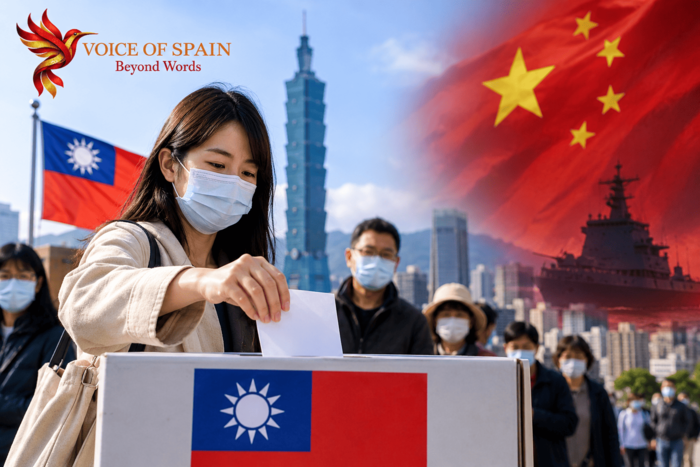
Taiwan has begun voting in closely watched local elections across all 22 of its cities and counties, with voters choosing mayors, county chiefs, councillors and other local representatives. The elections are attracting international attention as political competition on the island unfolds against the backdrop of increasing military pressure from China and wider concerns about regional security in East Asia.
Polling stations opened at 8:00 am local time on Saturday, with voting scheduled to close at 4:00 pm. The results are expected later in the evening. Approximately 11,000 local government positions are being contested across several categories, making the elections one of Taiwan's most significant political exercises ahead of its 2028 presidential and parliamentary elections.
Although the campaigns have largely concentrated on domestic priorities, including public transport, environmental protection, childcare, social welfare and economic development, relations with Beijing remain an important underlying issue. The governing Democratic Progressive Party (DPP) is seeking to strengthen its position against the opposition Kuomintang (KMT), which traditionally supports closer engagement with mainland China.
One of the most closely followed contests is the Taipei mayoral election, where DPP candidate Puma Shen is challenging incumbent Kuomintang mayor Chiang Wan-an. Beijing has repeatedly criticised Shen, accusing him of separatist positions, while the candidate has presented the election as an important test of Taiwan's democratic resilience.
Security developments have further intensified international interest in the vote. Taiwan's Ministry of National Defence reported detecting 33 Chinese military aircraft and eight naval vessels around the island during the 24 hours preceding Saturday's election. The reported military activity has reinforced concerns about Beijing's continued pressure on Taipei.
China claims Taiwan as part of its territory, while Taiwan maintains its own democratic government and political institutions. Beijing has repeatedly stated its intention to achieve reunification, while Taiwan's leadership rejects China's sovereignty claims.
The election is not expected to directly determine Taiwan's national China policy. However, its outcome could influence the political balance between the major parties, shape future campaign strategies and provide an indication of public sentiment ahead of the next presidential contest.
International observers are therefore monitoring both the electoral results and the wider regional implications, particularly as Taiwan remains strategically important to global semiconductor production, international shipping and security in the Indo-Pacific region.
VoS STRATEGIC INSIGHT
Taiwan's local elections represent more than a domestic political contest. They demonstrate how democratic institutions operate under sustained geopolitical pressure. The results could influence the island's political direction ahead of 2028, while China's military activity highlights the continuing security challenges facing the Indo-Pacific. Maintaining democratic stability, strengthening public confidence and protecting regional peace will remain central priorities for Taiwan and its international partners.