VoS NEWS DESK | SAN JOSÉ | 28 NOVEMBER 2026
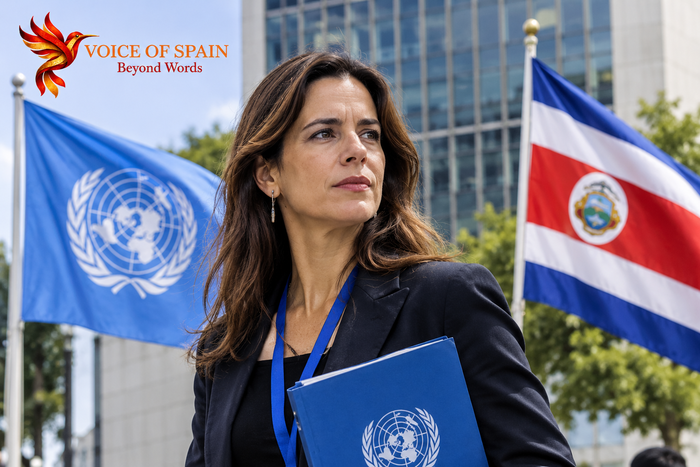
Costa Rica has come under international scrutiny after refusing entry to Francesca Albanese, the United Nations Special Rapporteur on the human rights situation in the occupied Palestinian territories. The decision has triggered criticism from senior United Nations officials and raised questions about the country's approach to international human rights responsibilities, diplomatic engagement and freedom of expression.
Albanese, an Italian international law expert appointed by the UN Human Rights Council in 2022, travelled to Costa Rica to receive an honorary doctorate from the University of Costa Rica, a leading public academic institution. However, immigration authorities prevented her from entering the country after she arrived at Juan Santamaría International Airport, which serves the capital, San José.
Costa Rican immigration authorities stated that the decision was based on an international security alert allegedly linking Albanese to terrorist activities. The country's immigration director, Omer Badilla, defended the action on national security grounds. However, authorities did not publicly provide detailed evidence supporting the allegations.
Albanese strongly rejected the accusations and criticised the decision, describing the situation as an unacceptable treatment of an international human rights expert. She has repeatedly raised concerns about alleged violations of international law in Gaza and the occupied West Bank, attracting criticism from Israel and some of its international allies.
The incident quickly attracted attention from the United Nations. UN High Commissioner for Human Rights Volker Türk expressed deep concern over Costa Rica's decision and called on the authorities to reconsider the restrictions. He argued that denying entry to an independent human rights expert on the stated grounds was difficult to reconcile with Costa Rica's longstanding commitment to human rights and international cooperation.
The situation also raised questions about the country's changing foreign policy direction. Costa Rica has historically maintained a strong international reputation for supporting multilateral institutions, peaceful diplomacy and human rights initiatives. However, its increasingly close political and security alignment with the United States and Israel has attracted attention amid wider disagreements over the conflict in the Middle East.
The University of Costa Rica had invited Albanese to receive the honorary distinction, making the incident particularly significant for the country's academic and international relations communities. The controversy also highlighted the challenges faced by independent international experts when carrying out their responsibilities in politically sensitive circumstances.
Legal proceedings further complicated the situation, with Costa Rica's Constitutional Chamber temporarily intervening to prevent her forced removal while considering a legal challenge. The dispute has therefore developed beyond an immigration decision into a wider discussion about constitutional protections, international obligations and the treatment of United Nations-appointed experts.
The case has attracted international attention, particularly because of the importance of ensuring that independent human rights officials can carry out their work without unjustified restrictions or political intimidation.
VoS STRATEGIC INSIGHT
Costa Rica's decision highlights the increasingly complicated relationship between national security policies, international diplomacy and human rights commitments. Countries have the authority to enforce immigration regulations, but decisions involving internationally appointed human rights experts can carry significant diplomatic consequences. The response from the United Nations demonstrates the importance of transparency, accountability and respect for independent international mandates. The incident may also influence how the international community evaluates Costa Rica's traditional role as a supporter of multilateralism and human rights protection.