VoS NEWS DESK | THE HAGUE | 27 NOVEMBER 2026
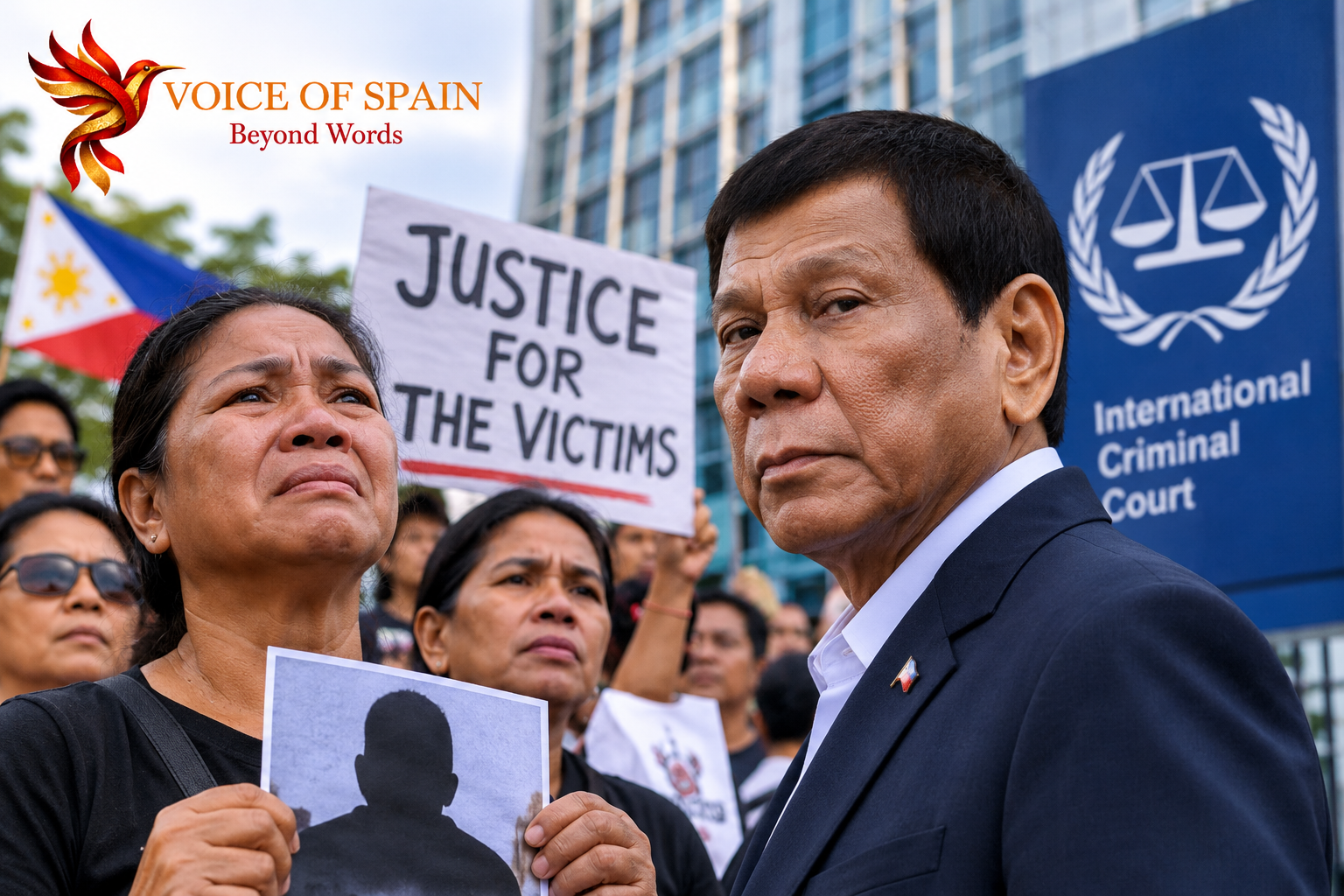
Families of people killed during former Philippine president Rodrigo Duterte's controversial anti-drug campaign are preparing to witness a landmark legal proceeding at the International Criminal Court (ICC), where the former leader is scheduled to stand trial on 30 November 2026 over alleged crimes against humanity.
The upcoming proceedings represent a significant moment for relatives who have spent years seeking accountability for the deaths of their loved ones. Among them is Llore Pasco, a Filipino mother whose two sons were killed during the anti-drug campaign. She is travelling to The Hague to attend the proceedings and hopes that the trial will provide an opportunity for victims' families to have their experiences heard before an international judicial institution.
According to prosecutors, Duterte faces allegations relating to 85 murders and two attempted murders between 2011 and 2018, covering periods when he served as mayor of Davao City and later as president of the Philippines. Prosecutors argue that these cases represent only a small proportion of the wider killings associated with the campaign, which they estimate could have involved as many as 30,000 deaths. Philippine law enforcement agencies have separately acknowledged 6,248 deaths connected to anti-drug operations.
The case has attracted international attention because it concerns allegations against a former head of state and raises wider questions about political accountability, human rights and the responsibility of national leaders under international law. More than 500 alleged victims are expected to be represented during the proceedings, allowing affected families and their legal representatives to participate in the judicial process.
Duterte's defence team has rejected the allegations, arguing that there was no state or organisational policy to commit murder and challenging the jurisdiction of the international court. His lawyers have also previously questioned his fitness to stand trial because of concerns about his health and cognitive condition. However, judges ruled that proceedings could continue, with shorter court sessions planned to accommodate his age.
The former president was arrested in March 2025 and transferred to The Hague, where he has remained in detention. His daughter, Philippine Vice President Sara Duterte, has also criticised the involvement of an international court, raising questions about national sovereignty and foreign jurisdiction.
The trial is expected to continue well into 2027, making it one of the most closely watched international legal proceedings involving a former Asian head of state.
VoS STRATEGIC INSIGHT
The Duterte case represents a significant test of international justice and the principle that political authority does not automatically place leaders beyond legal accountability. Beyond its implications for the Philippines, the proceedings could influence future discussions about human rights protection, the independence of international judicial institutions and the ability of victims to seek justice beyond national borders. The participation of hundreds of alleged victims also highlights the importance of giving affected communities a voice in proceedings involving serious human rights allegations.