VoS NEWS DESK | BRUSSELS | 3 July 2026
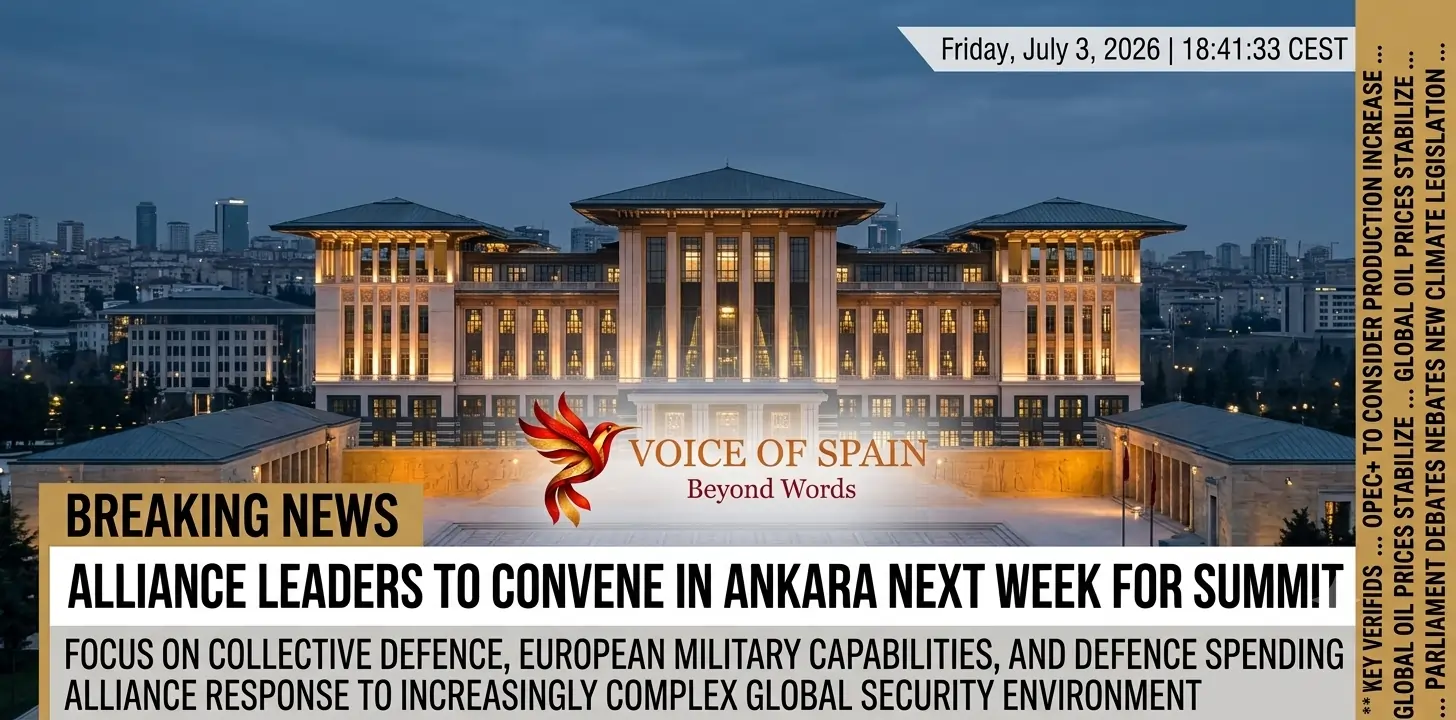
NATO leaders are preparing to gather in Ankara on 7–8 July for one of the Alliance's most consequential summits in recent years. The meeting comes at a time of heightened geopolitical uncertainty, with member states seeking to strengthen collective defence while adapting to changing strategic realities across Europe, the Middle East and the Indo-Pacific.
A central theme of the summit will be Europe's growing responsibility for its own defence capabilities. According to NATO's Supreme Allied Commander Europe, European allies have already filled most of the capability gaps created by recent reductions in United States force commitments, although work continues in a limited number of specialised areas. Alliance officials are expected to discuss how these adjustments can strengthen NATO's long-term readiness while maintaining transatlantic cohesion.
Defence investment is also expected to dominate the agenda. Member states will review progress towards increased military spending, expansion of defence-industrial production and enhanced operational readiness. Leaders are likely to reaffirm their commitment to improving deterrence capabilities while ensuring that NATO remains prepared to respond to both conventional and emerging security threats.
Beyond military planning, the summit is expected to address continued support for Ukraine, resilience against cyber and hybrid threats, and closer cooperation with Indo-Pacific partners. Several non-member partner nations are also expected to participate in discussions aimed at strengthening international security cooperation amid an increasingly interconnected global environment.
VoS STRATEGIC INSIGHT
The Ankara Summit reflects a significant evolution in NATO's strategic posture. The Alliance is no longer focused solely on territorial defence; it is increasingly addressing technological innovation, industrial resilience, cyber security and geopolitical competition. Decisions taken in Ankara may shape Euro-Atlantic security policy well beyond the current decade.
Sources consulted: Reuters | Official NATO Statements | VoS News Desk.
.png)
.png)
.png)
.png)
.png)
.png)
.png)
.png)