
VoS NEWS DESK | Europe & International Affairs | 11 August 2026
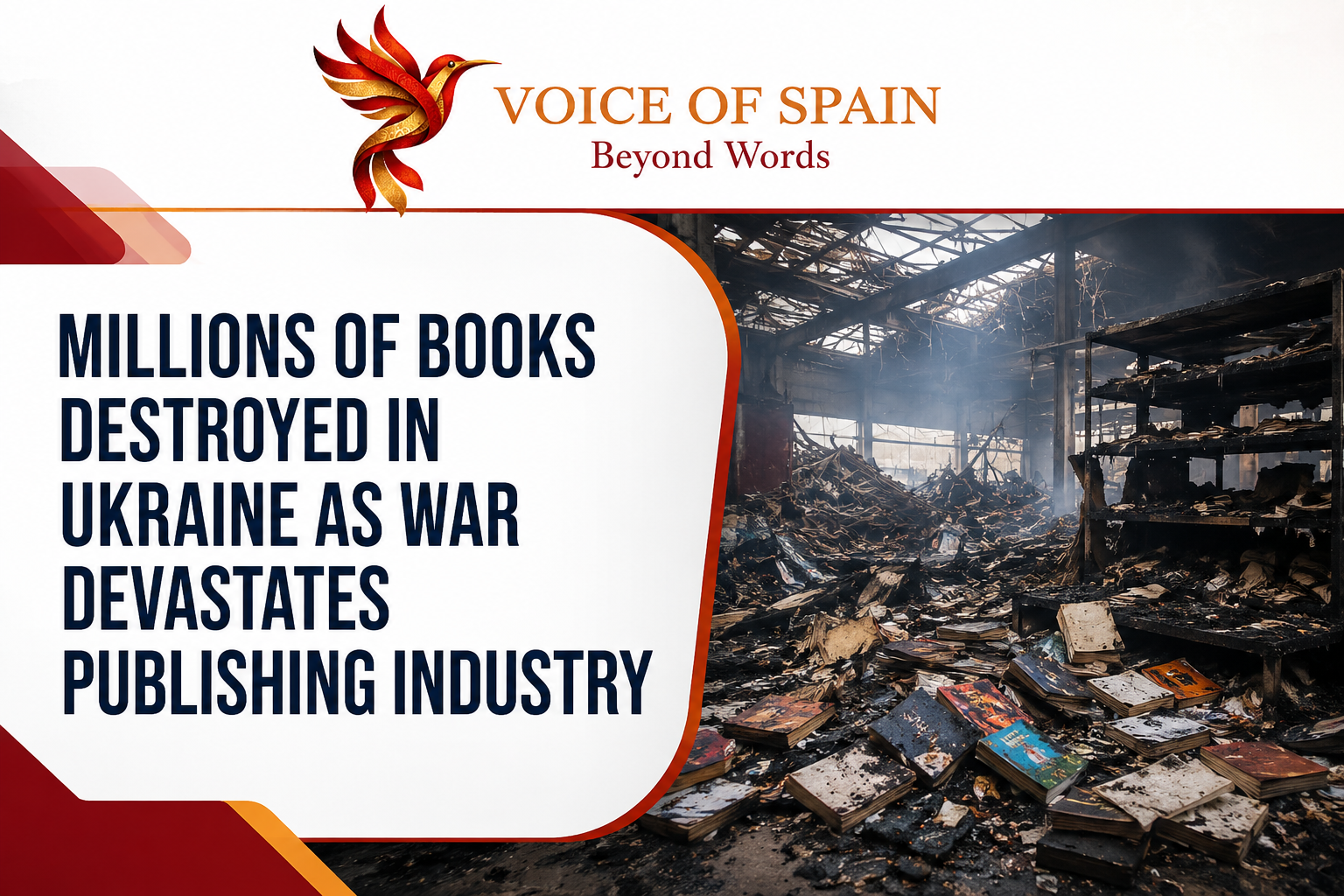
The latest damage came after a Russian drone strike hit a publishing warehouse operated by Ranok, one of Ukraine’s largest publishers, in Kharkiv on August 1. The attack destroyed approximately eight million books, according to Reuters, making it one of the most significant single losses suffered by Ukraine’s publishing sector since the beginning of the full-scale war.
The destroyed warehouse contained large quantities of books, including educational and children's publications. The scale of the destruction has shocked Ukrainian publishers because books require substantial financial investment, specialized production facilities and long periods of preparation before they reach schools, libraries and readers.
According to industry figures cited by Reuters, more than 10 million books have been lost in attacks in recent months. The losses have placed additional pressure on publishers already struggling with increased production costs, disrupted supply chains, damaged infrastructure and reduced economic activity caused by the war.
The publishing sector is particularly important in Ukraine because books are closely connected with the country's language, education and cultural identity. Ukrainian officials and publishing industry leaders have therefore described the destruction not simply as an economic loss but as another consequence of the wider assault on civilian and cultural infrastructure.
The damage to Ranok has also affected the availability of books for children and students. Replacing millions of destroyed copies will require considerable resources, while continuing attacks could make it difficult for publishers to restore normal operations.
Ukraine's wider economy has also been severely affected by the war. Reuters reports that the country's economy remains significantly below its pre-war level, while attacks on infrastructure and export facilities continue to create additional economic challenges.
Despite these difficulties, parts of Ukraine's economy have continued to operate and adapt to wartime conditions. The country's defense industry has expanded considerably, while other sectors are attempting to maintain production despite energy, transportation and security challenges.
For publishers, however, recovery is likely to remain difficult as long as attacks continue. Publishing requires functioning warehouses, printing facilities, transportation networks and access to markets. Damage to any one of these areas can create delays and significant financial losses.
The destruction of millions of books has therefore become a powerful symbol of how the war is affecting areas beyond the battlefield. It demonstrates that the conflict is also threatening education, culture and the institutions responsible for preserving and distributing knowledge.
VoS STRATEGIC INSIGHT
The destruction of millions of books highlights the wider humanitarian and cultural consequences of the war in Ukraine. While the immediate impact is financial, the long-term consequences could involve education, cultural preservation and access to Ukrainian literature. Rebuilding warehouses and replacing destroyed books will require substantial investment, but protecting publishing infrastructure and ensuring continued access to education will remain equally important as the conflict continues.
Source: VoS News Desk
.png)
.png)
.png)
.png)
.png)
.png)
.png)
.png)