VoS NEWS DESK | AFRICAN NEWS & INTERNATIONAL JUSTICE
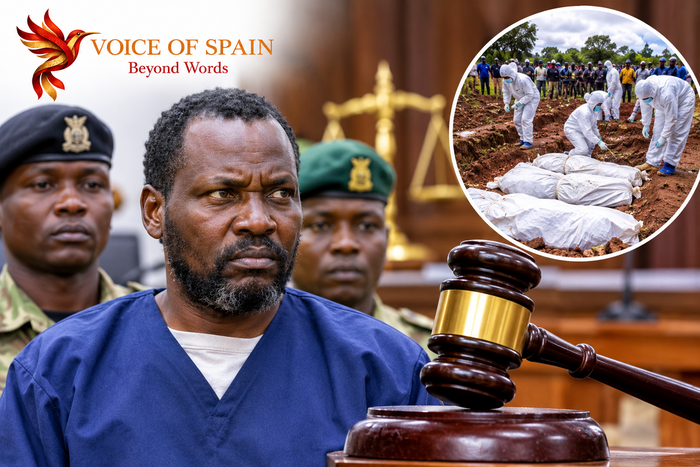
A Kenyan court has sentenced doomsday cult leader Paul Nthenge Mackenzie to 200 years in prison for his role in the deaths of 191 people, including 190 children and one adult. The ruling was delivered by the High Court in the coastal city of Mombasa on Friday, 6 November 2026, bringing a major development in one of Kenya's most disturbing mass-death cases.
Mackenzie, the leader of the Good News International Church, was convicted of directing followers to starve themselves to death in the belief that doing so would allow them to meet Jesus. The court found him primarily responsible for relocating followers to a remote area and instructing them to undertake extreme fasting.
Justice Diana Kavedza said Mackenzie bore primary criminal responsibility for the deaths. The sentence comprised 100 years for murders committed through starvation and another 100 years for direct homicide. The two sentences are to be served consecutively, resulting in a total prison term of 200 years.
The case involved 29 defendants, including Mackenzie and 28 other members of the group. The other accused included individuals who allegedly enforced fasting instructions, guarded followers and assisted in concealing bodies. The court found all 29 defendants guilty of murder on 19 October 2026.
According to the court's findings, 183 victims died from starvation, while eight others were classified as victims of direct homicide. Investigators established that the victims had been subjected to an organised system of extreme religious practices in which followers were encouraged to stop eating.
The tragedy came to international attention in 2023 after investigators discovered numerous shallow graves in the Shakahola Forest area of coastal Kilifi County. The burial sites were located on the extensive Chakama Ranch, where followers of Mackenzie's church had been living in remote conditions, largely separated from surrounding communities.
More than 400 bodies were eventually exhumed from the area. The discovery shocked Kenya and prompted extensive investigations into the activities of the religious group, the circumstances surrounding the deaths and the possible involvement of additional individuals.
Authorities faced considerable difficulties identifying the victims. Reports indicated that more than 60 bodies had been positively identified and returned to relatives for burial, while many others remained unidentified. The investigations also raised questions about the extent of the group's activities and the circumstances that allowed such a large number of people to remain isolated.
The court proceedings revealed the devastating impact of the group's teachings on families and children. Prosecutors presented evidence concerning the instructions given to followers and the role of individuals who allegedly ensured compliance with the fasting practices.
Mackenzie has faced other legal proceedings connected to the wider Shakahola investigation, including separate allegations involving terrorism, manslaughter, child abuse and torture. These proceedings concern matters beyond the 191 murder convictions.
The 200-year sentence represents a major judicial development for the victims' families, survivors and communities affected by the tragedy. The case has also intensified discussions in Kenya about religious accountability, the protection of vulnerable individuals and the monitoring of organisations operating outside established institutions.
VoS STRATEGIC INSIGHT
The Shakahola tragedy highlights the serious consequences that can arise when extreme religious teachings, isolation and coercive control combine to place vulnerable individuals at risk.
One of the most disturbing aspects of the case is the large number of children among the victims. Children depend on adults and responsible institutions for their safety, healthcare and basic needs. Their deaths have raised important questions about safeguarding systems and the ability of authorities to identify dangerous situations before they develop into large-scale tragedies.
The case also demonstrates the importance of maintaining a clear distinction between religious freedom and criminal conduct. Freedom of belief and worship is an important right, but it does not provide protection for activities involving coercion, violence, abuse or the deliberate endangerment of human life.
For Kenya, the investigation has brought renewed attention to the regulation of religious organisations, particularly those operating in isolated locations or exercising significant control over their followers. Effective oversight must respect constitutional freedoms while ensuring that criminal behaviour is identified and addressed.
Another major challenge concerns the identification of victims and support for surviving families. Proper forensic investigations, psychological assistance, transparent legal proceedings and long-term support for affected communities remain essential.
The 200-year sentence sends a significant message about legal accountability in cases involving mass deaths. However, preventing similar tragedies requires more than punishment after the loss of life. Public awareness, community reporting, child protection and effective institutional oversight are all necessary.
The Shakahola case will remain an important reference point in discussions about human rights, religious freedom, criminal responsibility and the protection of vulnerable communities.