
World
 Back to home
.png)
.png)
.png)
.png)
.png)
.png)

.png)
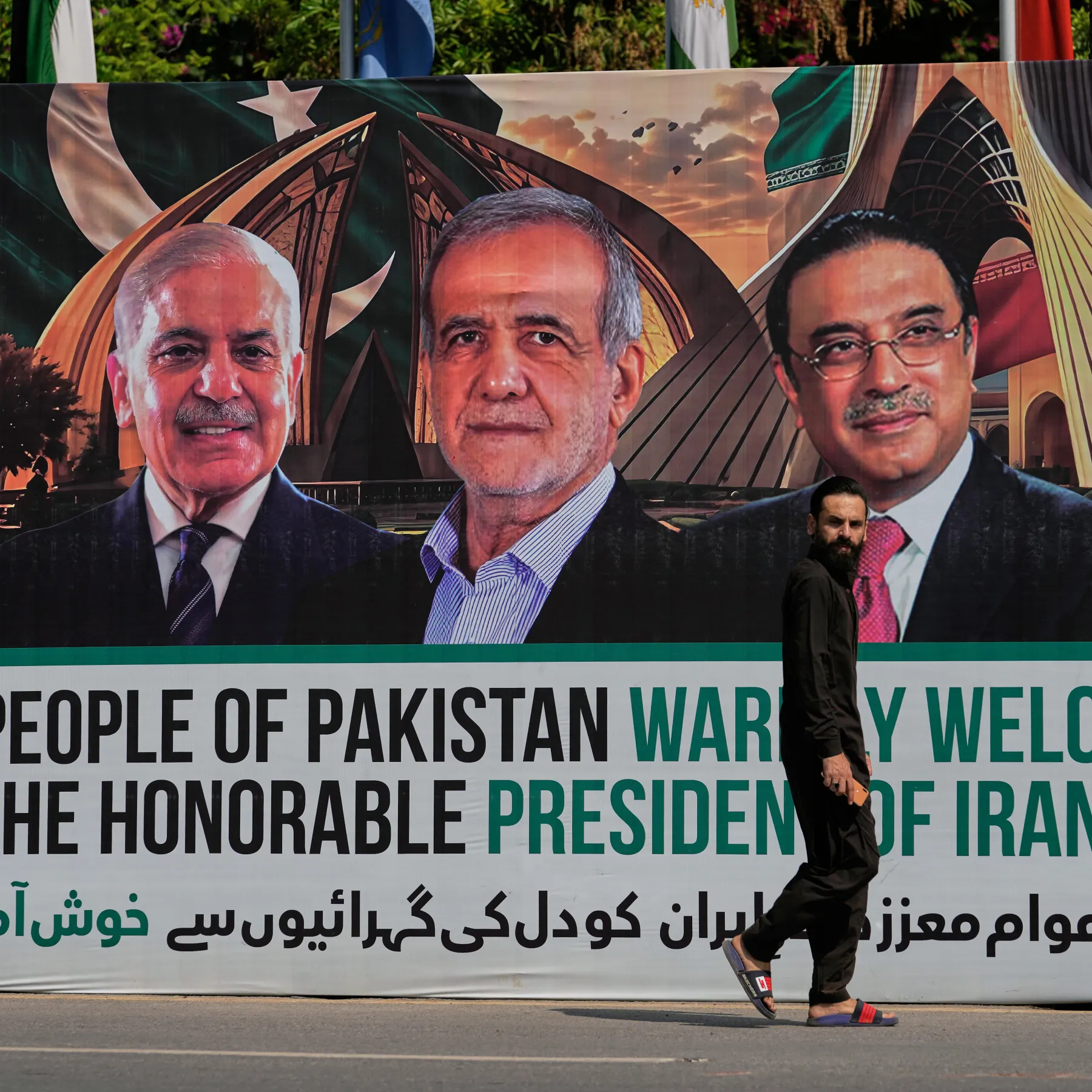
Iranian President Masoud Pezeshkian visits Islamabad following historic breakthroughs in US-Iran peace roadmap
The President of the Islamic Republic of Iran, Dr. Masoud Pezeshkian, concluded a highly significant one-day official state visit to Pakistan this week. Arriving amid tight security, the Iranian leader was received with high-level state protocols in Islamabad by Pakistani President Asif Ali Zardari and Prime Minister Shehbaz Sharif. This high-profile diplomatic mission marks Dr. Pezeshkian’s first official trip beyond Iranian borders since the cessation of the intense regional conflict that began earlier this year, underscoring the deep geopolitical weight attached to the Islamabad-Tehran bilateral relationship.
The primary objective of the high-level visit was to formally acknowledge and consolidate the diplomatic breakthroughs achieved under the Islamabad Memorandum of Understanding. This historic 14-point framework accord, recently brokered through the joint mediation efforts of Pakistan and Qatar, establishes a strict 60-day roadmap designed to achieve permanent peace, the removal of economic sanctions, and the diplomatic normalization of relations between Tehran and Washington. President Pezeshkian used the platform of a joint press stakeout at the Prime Minister House to express profound gratitude to the state of Pakistan, praising the civilian government and the military command for their sincere, consistent, and visionary efforts to de-escalate severe regional flashpoints and open reliable communication channels between conflicting global powers.
Beyond the overarching focus on global diplomacy, the bilateral delegations engaged in comprehensive, long-term discussions aimed at restructuring regional cooperation. In high-level meetings that included Pakistan's political leadership, Senate Chairman Yousuf Raza Gilani, and Chief of Defence Forces Field Marshal Asim Munir, both sides conducted a thorough review of their shared economic and security challenges. A major focal point was the immediate revitalization of the long-delayed Iran-Pakistan gas pipeline project. While Iran has finished its domestic portion of the infrastructure, formal trade has frequently faced complications due to the threat of international secondary sanctions. Both leaderships expressed a mutual desire to establish secure, alternative legal mechanisms to resume cross-border energy cooperation, transform informal border trade into structured economic corridors, and uplift border communities.
Security coordination along the volatile 900-kilometer shared border also occupied a significant portion of the diplomatic agenda. In light of the recent regional shifts, both nations reaffirmed their determination to implement rigorous joint border management protocols to curb illegal crossings and neutralize security threats. President Pezeshkian explicitly stated that long-term regional stability could only be guaranteed through transparent, frank dialogue among neighboring states. In a symbolic gesture, Iran extended a formal "hand of friendship" to all Muslim nations, inviting them to participate in establishing a self-sustaining regional security architecture that eliminates the need for external military intervention. The state visit concluded with both Pakistan and Iran signing updated bilateral declarations, signaling a shared commitment to opening an advanced chapter of economic, cultural, and strategic connectivity.
Enjoyed this article?
Subscribe to get exclusive news and daily updates delivered to your inbox.
Related News
Congo’s Ebola Outbreak Accelerates as Death Toll Surpasses 2...
Philippines’ $54 Billion Borrowing Plan Raises Private-Secto...
China-Linked Hackers Accused of Using AI in Major Cyberattac...
Zambia Heads to the Polls as Economic Reforms Face a Major T...
China Reports Failure of Long March 7A Rocket Launch
New Neuroproteomics Facility Opens New Frontiers in Neurodeg...
Millions of Books Destroyed in Ukraine as War Devastates Pub...