VoS NEWS DESK | INTERNATIONAL DIPLOMATIC MISSION | 4 NOVEMBER 2026
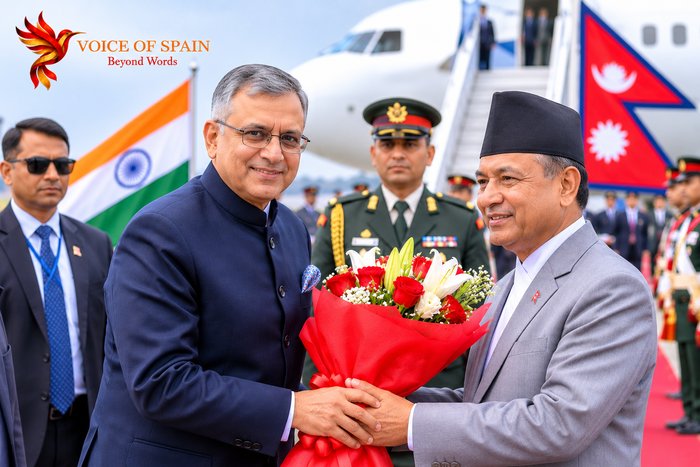
According to reports from Kathmandu, Sudhakar Dalela arrived in Nepal on 3 November 2026 to take charge as India's new Ambassador. Representatives of Nepal's Ministry of Foreign Affairs and officials from the Embassy of India welcomed him upon his arrival at the airport. His appointment represents an important step in India's diplomatic engagement with Nepal, a neighbouring country with which it shares longstanding historical, cultural, economic and geographical connections.
Dalela succeeds Naveen Srivastava as India's Ambassador to Nepal. His arrival also comes ahead of Indian Foreign Secretary Vikram Misri's scheduled visit to Kathmandu on 4 November. The diplomatic engagement is expected to focus on preparations for Nepalese Prime Minister Balendra Shah's anticipated visit to New Delhi, which has been reported as likely to take place on 22 November.
Sudhakar Dalela is a senior Indian Foreign Service officer from the 1993 batch and brings considerable experience in international diplomacy and regional relations. Before his latest appointment, he served as India's Ambassador to Bhutan from 2022 to 2025, where he was involved in managing diplomatic relations between the two neighbouring countries.
Following his assignment in Bhutan, Dalela served as Secretary for Economic Relations in India's Ministry of External Affairs from September 2025. This responsibility involved important aspects of India's international economic engagement, development partnerships and cooperation with foreign governments.
His professional background also includes previous responsibilities relating directly to India-Nepal and India-Bhutan relations. During his earlier diplomatic career, he worked in the Northern Division of India's Ministry of External Affairs as both Director and Joint Secretary. These positions provided him with experience in regional diplomacy and the political and administrative issues affecting India's relationships with neighbouring countries.
Dalela has also served in India's Prime Minister's Office and held diplomatic assignments in several countries, including the United States. His experience across different diplomatic institutions and international environments is expected to support his work in Kathmandu.
India and Nepal maintain a particularly important bilateral relationship because of their shared border, close people-to-people connections and extensive economic interaction. Citizens of both countries have longstanding links through employment, education, trade, tourism, family relationships and cultural traditions. Their cooperation also extends to infrastructure development, energy production, transportation and regional security.
Economic cooperation remains one of the central areas of the relationship. India is an important trading and development partner for Nepal, while both countries have continued to explore opportunities in hydropower, electricity transmission, cross-border connectivity and infrastructure projects. Nepal's growing electricity production has also created opportunities for expanded energy trade with India, making cooperation in the power sector an important element of their economic relationship.
Cross-border connectivity is another significant priority. Roads, railway connections, integrated check posts and other transport facilities play an important role in facilitating trade and movement between the two countries. Improved infrastructure can help reduce transportation difficulties, support businesses and provide greater opportunities for communities living in border regions.
The timing of Dalela's arrival is also important because of the upcoming diplomatic engagement involving Indian Foreign Secretary Vikram Misri. His scheduled visit on 4 November is expected to provide an opportunity for discussions concerning the agenda of Prime Minister Balendra Shah's anticipated visit to New Delhi. Such high-level exchanges can help both governments review existing commitments, identify new areas of cooperation and address matters requiring diplomatic attention.
The relationship between India and Nepal has also experienced challenges over the years, including disagreements concerning border issues, political developments and the implementation of bilateral projects. Regular diplomatic communication is therefore essential for maintaining mutual understanding and ensuring that differences are addressed through dialogue.
Dalela's appointment comes at a time when regional cooperation is becoming increasingly important across South Asia. Economic connectivity, energy security, trade diversification and infrastructure development are among the issues shaping relations between neighbouring countries. His experience in economic diplomacy and regional affairs could prove particularly relevant as India and Nepal seek to expand their cooperation.
VoS STRATEGIC INSIGHT
The arrival of Sudhakar Dalela in Kathmandu represents more than a routine diplomatic appointment. It comes at an important moment for India-Nepal relations, particularly as both countries prepare for further high-level political engagement. His previous experience in Bhutan and India's Ministry of External Affairs provides him with an understanding of the diplomatic priorities and regional challenges that influence India's relationships with its neighbours.
One of the most important areas of potential cooperation is economic connectivity. Nepal's geographical position between India and China makes regional infrastructure and trade relationships particularly significant. Stronger transport links, reliable energy networks and improved border facilities could support Nepal's economic development while creating additional opportunities for Indian businesses and regional trade.
Energy cooperation is another area with considerable strategic importance. Nepal possesses substantial hydropower potential, while India represents an important market for electricity exports. Continued cooperation in electricity generation, transmission infrastructure and cross-border energy trade could benefit both countries and contribute to wider regional energy security.
Diplomatic engagement will also be essential for addressing existing differences. Although India and Nepal share close cultural and historical connections, disagreements over political and territorial matters have occasionally affected bilateral relations. Maintaining regular communication, respecting each country's sovereignty and resolving outstanding issues through constructive dialogue will remain important responsibilities for their diplomatic representatives.
Dalela's appointment could also help strengthen institutional cooperation between the two governments. His experience in economic relations may support discussions on development assistance, investment, infrastructure and regional partnerships. The effectiveness of these efforts will depend on practical implementation, consistent communication and the ability of both governments to translate diplomatic commitments into measurable outcomes.
The anticipated visit of Nepalese Prime Minister Balendra Shah to New Delhi could provide another opportunity to strengthen bilateral engagement. If the visit proceeds as expected, it may create momentum for discussions on trade, development projects, energy cooperation and broader regional priorities.
Overall, Sudhakar Dalela's arrival in Nepal marks an important new chapter in India's diplomatic representation in Kathmandu. His experience, combined with the upcoming high-level diplomatic exchanges, provides an opportunity to reinforce mutual understanding and expand cooperation. The future direction of India-Nepal relations will depend on how effectively both governments address shared priorities while maintaining a stable and mutually respectful partnership.
Source: Ministry of External Affairs, Government of India, Akashvani News, The Kathmandu Post, Embassy of India in Nepal.