VoS NEWS DESK | EUROPEAN NEWS & POLITICAL DEVELOPMENTS
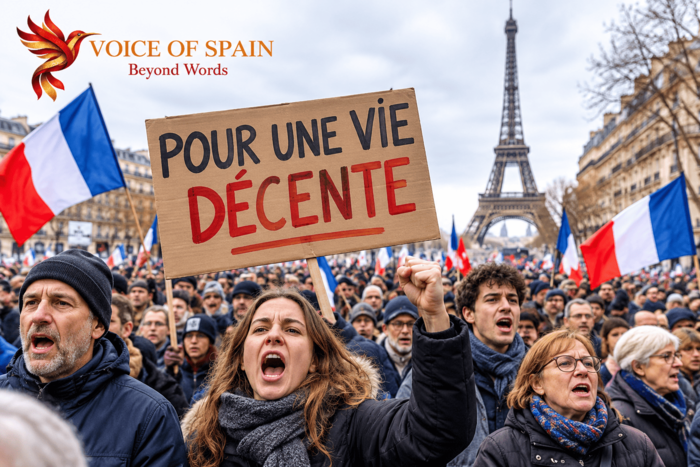
More than 140,000 people have taken to the streets across France in a fresh wave of demonstrations against rising living costs, increasing fuel prices and government policies. The protests, held on Saturday, 7 November, marked the fourth consecutive weekend of nationwide demonstrations, reflecting growing public dissatisfaction with economic conditions and the government's response to social demands.
According to figures released by France's Interior Ministry, approximately 146,000 people participated in demonstrations nationwide, including around 46,000 in Paris. However, trade unions reported a significantly higher turnout, estimating that approximately 250,000 people had joined the protests across the country, including 75,000 in the capital. The difference between the figures reflects the competing estimates provided by authorities and organisers.
The demonstrations brought together students, workers, trade union members and people from different professional backgrounds. Protesters raised concerns about the rising cost of everyday necessities, expensive fuel, stagnant wages and deteriorating living standards. Many participants also demanded better public services, improved educational facilities and stronger government action to address economic pressures.
The latest mobilisation follows a series of demonstrations that began in September. Initially, student-led protests focused on poor conditions and inadequate resources in French secondary schools. However, the movement gradually expanded as workers and other sections of society joined, bringing broader economic and political grievances into the demonstrations.
Security remained a major concern during Saturday's rallies. French authorities deployed approximately 70,000 security personnel across the country to maintain public order and prevent violence. Interior Minister Laurent Nuñez warned that police would respond to rioting and looting.
Although many demonstrations proceeded peacefully, clashes were reported in Paris and Lyon. Police used tear gas to disperse groups of protesters in both cities. In Paris, footage circulated by the CLPRESS news agency showed officers charging towards demonstrators. Police also reported that a group of approximately 200 people attacked officers during an operation to arrest a man accused of setting fire to a rubbish bin.
In Lyon, police used tear gas against several hundred people who had blocked a road during an unauthorised gathering. These incidents highlighted the difficulties facing security authorities as demonstrations continued across major urban centres.
The protests also reflect wider concerns about employment conditions, purchasing power and the quality of public services. Trade union representatives have called for higher salaries and improved working conditions, arguing that employees are struggling to maintain their standard of living amid increasing household expenses.
The demonstrations are taking place against the backdrop of France's approaching presidential election, scheduled for April 2027. Economic policy, public spending, education and the government's handling of social unrest are becoming increasingly prominent issues in the country's political debate.
VoS STRATEGIC INSIGHT
The continuing demonstrations in France demonstrate how economic pressures can develop into wider social and political movements. Rising living costs, fuel prices and concerns about public services have brought together different groups that may otherwise have separate priorities.
One important aspect of the protests is the growing participation of young people. Demonstrations that initially focused on school conditions have expanded into a broader discussion about employment opportunities, economic security and the future of public services. This indicates that concerns about living standards are not limited to one section of French society.
The difference between official and trade union attendance figures also highlights the importance of transparent reporting during large demonstrations. Reliable information about participation, arrests and security incidents is essential for understanding the scale and nature of public mobilisation.
For the French government, the challenge involves balancing demands for improved wages and services with economic constraints and budgetary pressures. Any policy response will need to address immediate household concerns while considering the country's longer-term financial position.
The coming weeks may prove important in determining whether negotiations between the government, employers and trade unions can reduce tensions. The protests also demonstrate that economic policy and public service provision are likely to remain central subjects of national political debate ahead of the 2027 presidential election.