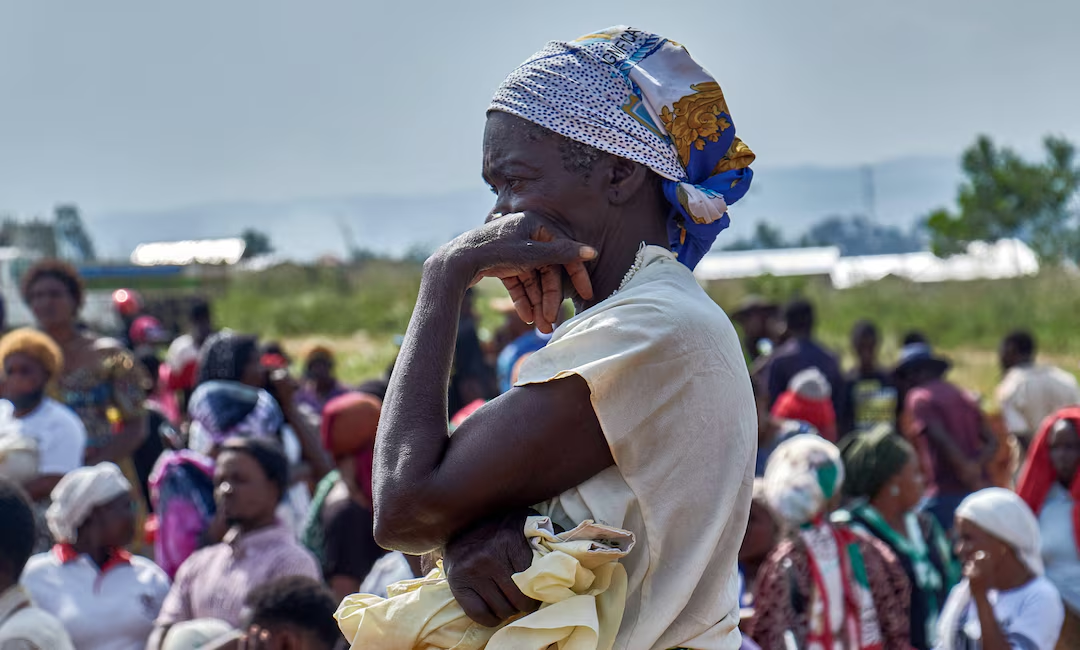
The Democratic Republic of Congo is confronting an escalating public health emergency as the Ebola outbreak spreads beyond initial containment zones into previously unaffected health districts. The Bundibugyo species of Ebola virus, identified as the causative agent, has demonstrated concerning transmission patterns across multiple provinces including Ituri and surrounding regions. International health organizations have mobilized emergency response teams, with the World Health Organization coordinating with African CDC and national authorities to implement containment strategies. The outbreak represents the 17th confirmed Ebola epidemic in DRC history, yet epidemiologists note that the speed and scale of transmission exceed previous documented patterns. Confirmed cases have risen significantly, with suspected cases numbering in the hundreds, creating overwhelming pressure on already-strained healthcare infrastructure. The geographic expansion into new health zones indicates that transmission chains have extended beyond initial outbreak epicenters, suggesting community-level spread rather than isolated incidents. International donors have pledged substantial financial support, with the U.S. State Department announcing $20 million in additional funding specifically for response and preparedness efforts.
The geopolitical implications of the outbreak extend beyond immediate health concerns, as regional instability and cross-border population movements complicate containment efforts. Uganda has reported confirmed cases, establishing the outbreak as a transnational crisis requiring coordinated international response. The situation has prompted discussions within the United Nations Security Council regarding humanitarian access and regional security considerations. Healthcare workers face unprecedented challenges, including inadequate personal protective equipment, limited laboratory capacity, and community resistance to containment measures. The outbreak occurs amid broader regional conflicts that have displaced populations and disrupted health systems, creating conditions favorable for viral transmission. International medical teams from multiple countries have deployed to affected areas, though logistical challenges and security concerns limit operational effectiveness. The crisis has prompted renewed discussions about pandemic preparedness, vaccine development, and the need for strengthened health infrastructure in vulnerable regions. Epidemiological modeling suggests that without aggressive intervention, case numbers could increase exponentially over coming weeks. The outbreak represents a critical test of international cooperation mechanisms and the global health community's capacity to respond to emerging infectious disease threats.
.webp)
.jfif)