
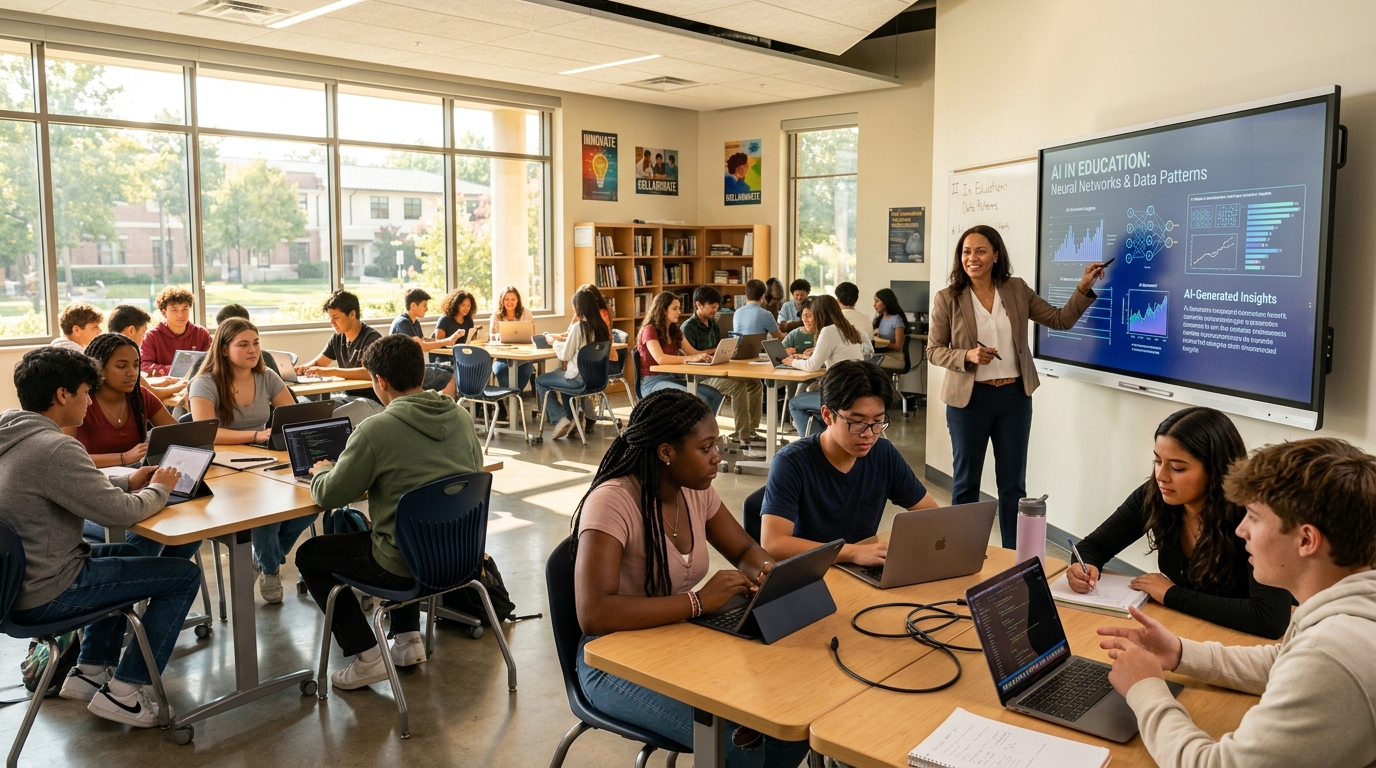
Educational institutions in the United States face unprecedented challenges as artificial intelligence technologies are rapidly integrated into classrooms, forcing teachers to rethink fundamental teaching methodologies and assessment practices. A comprehensive survey of teachers revealed that nearly three-quarters lack formal guidance on how to responsibly integrate AI tools into their teaching practices, creating a vacuum where each educator must independently address complex ethical and pedagogical issues. Schools struggle to balance the potential benefits of AI-powered personalized learning with legitimate concerns about student privacy, data security, and the erosion of critical thinking. The proliferation of AI-powered tutoring systems and automated grading platforms has outpaced institutional capacity to develop coherent policies regulating their use. Educators express concern about whether AI tools truly improve learning outcomes or merely provide the illusion of educational progress, while simultaneously undermining the deep cognitive development and human connection essential for meaningful education.
The integration of artificial intelligence into primary, secondary, and higher education represents a pivotal moment that requires a deliberate institutional strategy and investment in professional development. Forward-thinking school districts have begun implementing comprehensive AI literacy programs for both teachers and students, recognizing that technological proficiency will define educational competitiveness in the coming decades. However, resource disparities between well-funded suburban districts and under-resourced urban and rural schools threaten to exacerbate existing educational inequalities, as affluent communities gain early access to cutting-edge AI tools while disadvantaged populations are left behind. Professional organizations such as the National Council of Teachers of English have published frameworks that acknowledge AI as a “living reality” in classrooms, urging educators to develop critical perspectives on algorithmic bias, data ethics, and appropriate boundaries between human judgment and machine decision-making. The challenge ahead requires constant collaboration between educators, technologists, policymakers, and parents to ensure that AI serves genuine educational purposes rather than simply becoming another tool for standardization and efficiency metrics that undermine the humanistic dimensions of teaching and learning.